
Last Updated: August 12, 2026
A decidual cast is when the lining of your uterus sheds as one solid piece of tissue instead of gradually, and it can feel exactly like a very heavy period with an extra shock. You might pass a fleshy, pink triangle that mirrors the shape of your uterus. Most of the time your body handles it, but it deserves a doctor’s check since it can be linked to ectopic pregnancy or hormonal birth control
Key Takeaway: A decidual cast is rare, usually harmless, and almost always passes on its own. The real job is ruling out ectopic pregnancy, because that needs urgent care.
What Is a Decidual Cast?
A decidual cast is a whole piece of uterine lining that leaves your body in one go. Your period normally sheds this lining little by little over a few days. With a cast, the thickened endometrium peels away as a single triangle-shaped piece that mirrors your uterus.
It’s not a common thing, and doctors only see a small number of cases. Many people pass one, feel confused, and never mention it again. Some never even realize what it was until the next checkup.
What Does a Decidual Cast Look Like
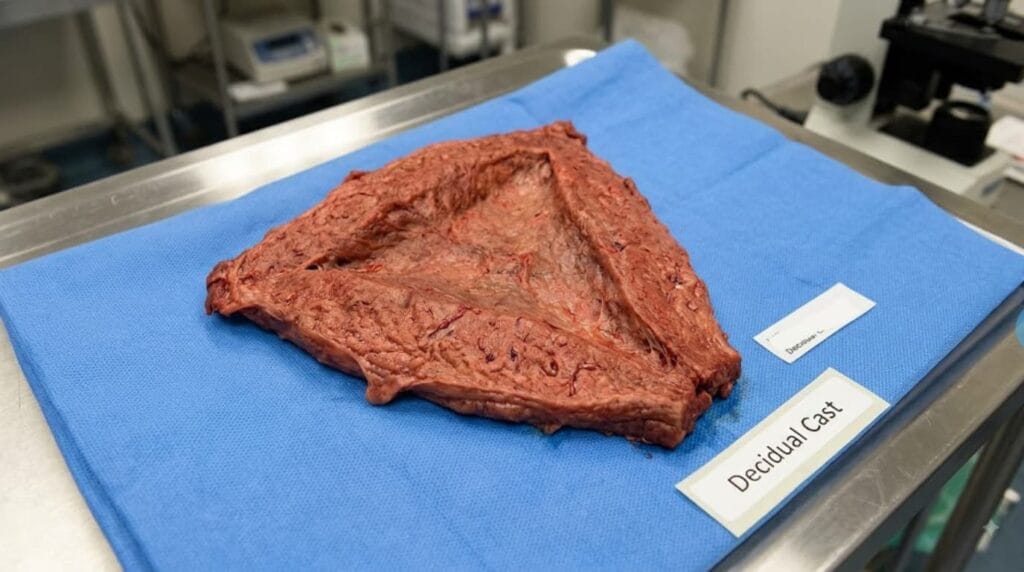
Heads up: Save the tissue (or a clear photo) and take it to your appointment. Doctors use it to confirm the cast and rule out anything serious.
Decidual Cast vs. Miscarriage
A decidual cast is not a miscarriage, even though the two feel alike. Both bring cramping, bleeding, and the passage of a large piece of tissue. That overlap is exactly why you should call your doctor the moment you pass a decidual cast if you might be pregnant.
- A decidual cast is uterine lining, not a pregnancy.
- A miscarriage involves pregnancy tissue, which needs medical confirmation.
- An ectopic pregnancy is a medical emergency and must be ruled out first.
A simple home pregnancy test is your first stop. Negative and feeling okay? Take some pain relief, use a heating pad, and check in with your provider. Positive or unsure? Go to urgent care or the ER without delay.
What Causes a Decidual Cast?
Doctors don’t have one clean answer, but the pattern in case studies points to hormone shifts, especially a surge of progesterone. The two most common situations are:
- Hormonal birth control. Pills, the shot, implants, or IUDs that release progestin can thicken the lining enough to shed as one piece, particularly if you recently started, switched, or stopped them.
- Ectopic pregnancy. When an embryo implants outside the uterus, the lining builds up in response to pregnancy hormones. If the pregnancy ends, the lining can leave as a single cast.
Fertility treatments that use HCG injections have also been linked to it. In most reported cases, the person was using or had just stopped a progestin-based contraceptive, per a review in the National Library of Medicine.
Here’s the honest part about trade-offs: knowing this does not mean birth control is bad for you. A decidual cast is rare, and the convenience and protection of contraception outweigh the small chance of passing a cast. Talk to your doctor if it worries you, but don’t quit your method on your own.
Symptoms and What It Feels Like
The lining has to squeeze through your cervix, and that hurts more than a normal period. Women describe it as intense, crampy pressure that builds and then suddenly releases. Common companions are:
- Severe menstrual cramps that feel worse than your usual ones
- Pelvic pain and pressure
- Heavy bleeding or spotting before it passes
- Nausea
- Dizziness or feeling faint
The strange silver lining: once the cast passes, the symptoms usually stop almost immediately. Many people report instant relief the second the tissue is out. Doctors call this kind of painful shedding membranous dysmenorrhea.
Is It Dangerous? When to Call a Doctor
For most people, a decidual cast is not dangerous and leaves no long-term damage. It typically happens once and never again. The danger isn’t the cast itself, it’s what it might be hiding, which is why the rules below exist.
Call your doctor right away (or go to the ER) if you:
- Might be pregnant or got a positive pregnancy test
- Have bleeding heavy enough to soak a pad every hour
- Feel dizzy, faint, or have shoulder pain
- Pass tissue while taking hormonal birth control for the first time
- Have pain that doesn’t fade after the tissue passes
Ectopic pregnancy is the one to catch early. A ruptured ectopic can cause internal bleeding that is life-threatening. Cleveland Clinic explains that any tissue passed from the vagina could signal an ectopic pregnancy, so providers rule it out first.
How Is a Decidual Cast Diagnosed?
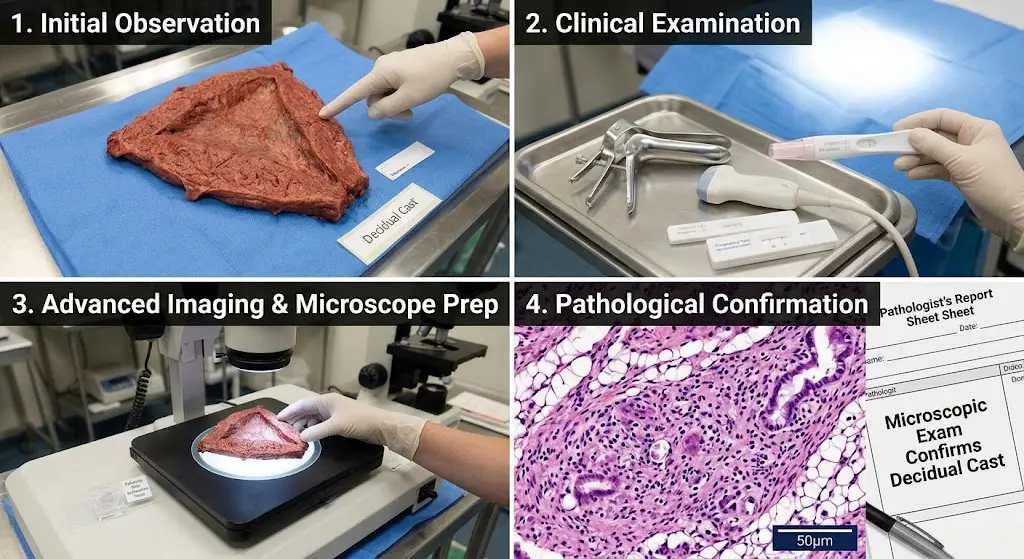
You’ll usually know after it passes, since that’s when the cast appears. Your doctor will confirm the cause by checking your history, doing a physical and pelvic exam, and running a pregnancy test. They may also order an ultrasound to look for ectopic pregnancy, leftover tissue, fibroids, or polyps that mimic it.
If the tissue looks suspicious under the microscope, a pathologist can confirm it’s a decidual cast and rule out rarer conditions. That report is what ends the guessing game and lets you relax.
Frequently Asked Questions
Can a decidual cast happen without being pregnant?
Yes. Passing a decidual cast without pregnancy is common, mostly linked to hormonal birth control. The progestin in pills, the shot, implants, or certain IUDs can build the lining enough to shed as one piece.
Is a decidual cast a miscarriage?
No, a decidual cast is not a miscarriage. It is shed uterine lining, not pregnancy tissue. The two feel similar, so always rule out pregnancy and ectopic pregnancy with your doctor.
How big is a decidual cast normally?
A decidual cast matches the size and shape of your uterus, roughly an upside-down triangle. Most are about the size of a small palm, though it varies. Bright pink-red color and a fleshy, shiny surface are typical.
Can birth control cause a decidual cast?
Yes, hormonal contraception with progestin can trigger one, especially after starting, switching, or stopping it. It is rare, and it’s not a reason to quit birth control. Mention it to your doctor if it happens.
Should I go to the ER for a decidual cast?
Go to the ER if you might be pregnant, have heavy bleeding, faintness, or shoulder pain. Otherwise, call your doctor within a day. The cast itself usually isn’t an emergency, but ectopic pregnancy is.
How long does a decidual cast take to come out?
Most people pass it within hours to a day of heavy cramping. Once the tissue is out, symptoms usually stop almost immediately. Cramping may continue lightly for a day or two as your uterus settles.
The Bottom Line
A decidual cast is rare, scary-looking, and almost always harmless. It’s your uterine lining leaving all at once, usually waylaid by hormones. Let your doctor check it, take the pregnancy test, save the tissue if you can, and treat the cramps with heat and over-the-counter pain relief.
Track your cycle with a period calculator so irregular bleeding stands out instead of blending in. When something like this surprises you, the path is simple: breathe, call your doctor, and let them close the loop.
Natural Remedies for Irregular Periods · PMS Symptoms and How to Manage Them · Best Period Tracker Apps
If this article helped you make sense of a confusing moment, pass it along to someone who might need the same calm explanation.
Disclaimer: This article is for educational purposes only and is not a substitute for professional medical advice, diagnosis, or treatment. If you pass unusual tissue, think you might be pregnant, or have heavy bleeding, contact a healthcare provider immediately. Never self-diagnose based on this content.