
Author Note: I have tracked my own cycle for over twelve years, first on paper, then through a rotation of apps and calculators. The spotting versus period question confused me for a long time before I actually understood what my body was doing. This article comes from that experience, checked against current guidance from Mayo Clinic and other reproductive health sources.
Does Spotting Count as a Period?
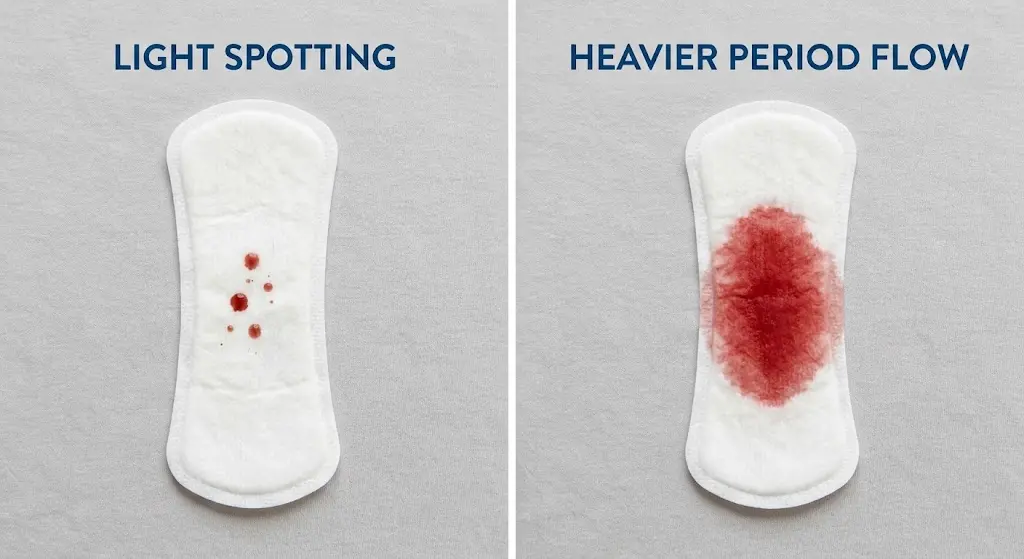
No, spotting does not count as a period. A true period starts on the first day of active, red bleeding heavy enough to need a pad or tampon. Spotting is lighter, often brown or pink, and it doesn’t mark Day 1 of a new cycle in a period tracker or calculator.
My “Wait, Is This My Period?” Moment
I remember standing in my bathroom at maybe 22, staring at a faint pink smear on toilet paper, completely convinced my period had started three days early. I logged it in my tracker app as Day 1. Four days later, my actual period showed up, heavy and unmistakable, and my entire cycle prediction was off by nearly a week.
Now answer Does Spotting Count as a Period? That mix up is more common than people think. Spotting and a true period look similar enough at first glance that even people who have had periods for a decade can second guess themselves. The difference matters, especially if you are using a free period calculator to predict ovulation, plan around your cycle, or just avoid getting caught without supplies. Feed a tracker the wrong Day 1, and every prediction after it drifts too.
So, Does Spotting Count as a Period?
Medically, no. Doctors and reproductive health sources agree that Day 1 of a cycle is the first day of real flow, not the first faint sign of blood. Spotting is usually light, doesn’t need a pad or tampon, and often shows up as a few pink or brown marks rather than steady bleeding.
Mayo Clinic describes a typical menstrual cycle as lasting somewhere between 24 and 38 days, with bleeding itself lasting up to about eight days. Spotting falls outside that real bleeding window. It’s your body doing something, just not the something that starts a new cycle count.
Key takeaway: If you’re not using a pad, tampon, or period underwear yet, and the blood is light enough to only show up on toilet paper, you’re probably looking at spotting, not Day 1.
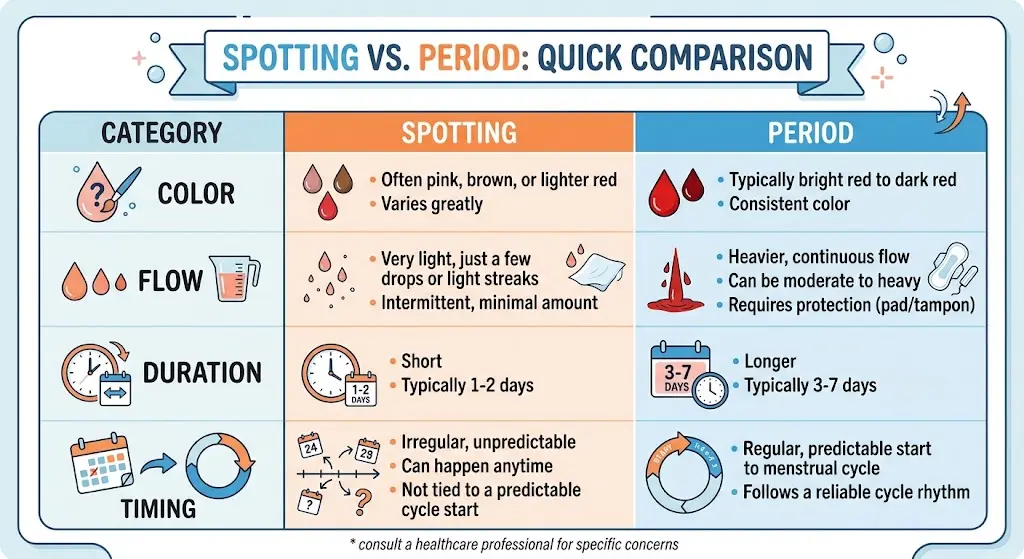
Spotting vs. Period: The Quick Comparison
Here’s the breakdown I wish someone had shown me at 22.
Color: Period blood starts bright to dark red and may look brownish by the last day. Spotting tends to be pink, light red, or brown from the start, almost like diluted juice.
Flow: A period is heavy enough to need a pad, tampon, or menstrual cup, especially in the first two or three days. Spotting is light enough that a liner or nothing at all gets the job done.
Duration: Periods typically last three to seven days. Spotting usually clears up within a few hours to two days.
Timing: Periods arrive on a rough schedule, every 24 to 38 days. Spotting can show up almost anywhere in your cycle, right before your period, mid cycle around ovulation, or after sex.
Why Day 1 Actually Matters
This is the part most articles skip. Getting Day 1 right isn’t just trivia, it’s the number every prediction depends on.
Cycle length, ovulation window, PMS timing, and your next period’s estimated date all get calculated from that one starting point. Mark spotting as Day 1 by mistake, and a free period calculator will hand you a prediction that’s wrong before you’ve even finished typing.
I learned this the annoying way, packing for a work trip based on a prediction that was five days off because I’d logged spotting as my start date the cycle before. Now I wait for actual flow before I touch the calendar, and my predictions have been steady ever since.
What Actually Causes Spotting?
Spotting isn’t automatically a red flag. Most of the time it traces back to something ordinary.
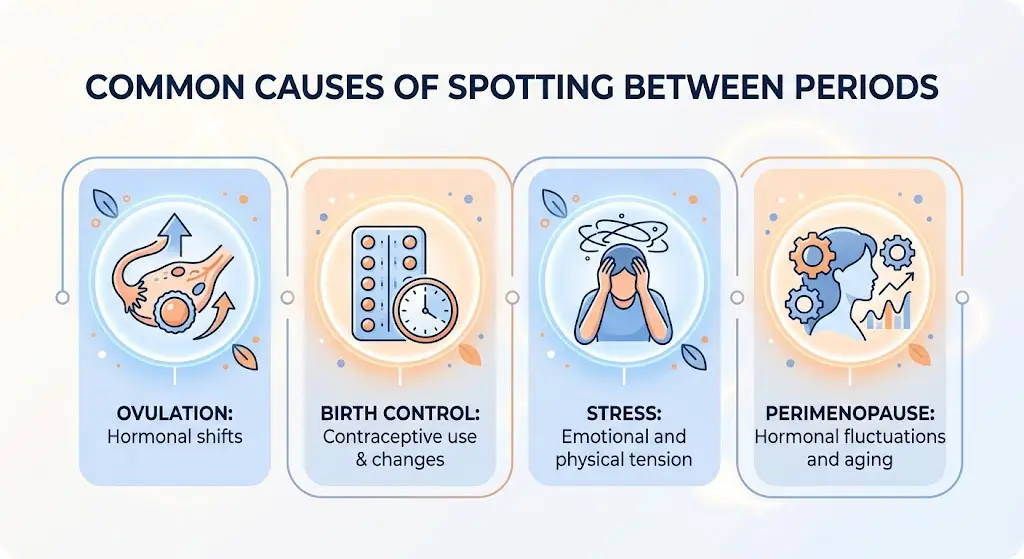
- Ovulation. A quick hormone dip around the middle of your cycle can cause a day or two of light pink or brown spotting.
- Starting or switching birth control. Pills, IUDs, implants, and patches commonly cause breakthrough spotting for the first few months.
- Stress and big life changes. Illness, travel, poor sleep, and emotional stress can all nudge your hormones enough to cause light bleeding.
- Perimenopause. As estrogen and progesterone become less predictable in your late 30s and 40s, spotting between periods gets more common.
- Underlying conditions. Fibroids, polyps, thyroid issues, and PCOS can all cause spotting, which is part of why persistent spotting deserves a doctor’s opinion rather than a guess.
- Early pregnancy. Roughly one in five pregnant people notice some spotting in the first trimester, according to Orlando Health.
A first period sometimes starts the same confusing way. A lot of teens notice light brownish spotting for a day before real flow shows up, and it’s easy to mark that first faint sign as Day 1 out of excitement or nerves. The same rule still applies. Wait for steady flow before logging a start date, since an early guess can make a teen’s very first tracked cycle look irregular when it’s actually just spotting doing its normal thing.
Could It Be Implantation Bleeding Instead?
If your spotting shows up about a week before your period is due and you’ve had unprotected sex that cycle, implantation bleeding is worth considering.
The two can look almost identical, but there are small tells. Implantation bleeding tends to be lighter than even typical spotting, often just a pink or rust colored trace that lasts a day or two. It shows up roughly six to twelve days after conception, which usually lands anywhere from several days to just before your expected period. A true period keeps going and gets heavier for at least a day or two before it tapers off.
Neither spotting from implantation nor spotting from hormones counts as your period starting. If you suspect pregnancy, the only way to know for sure is a test, ideally taken after your missed period for the most reliable result.
What About Brown Discharge Before Your Period?
Brown discharge is almost always older blood that took a little longer to leave your body and oxidized along the way, which is what turns it brown instead of red. It commonly shows up a day or two before your period actually starts, or lingers for a day or two after it ends.
On its own, brown discharge before your period is spotting, not your period itself. Wait for the color to shift to red and the flow to pick up before you mark Day 1.
How to Track Spotting Without Wrecking Your Predictions
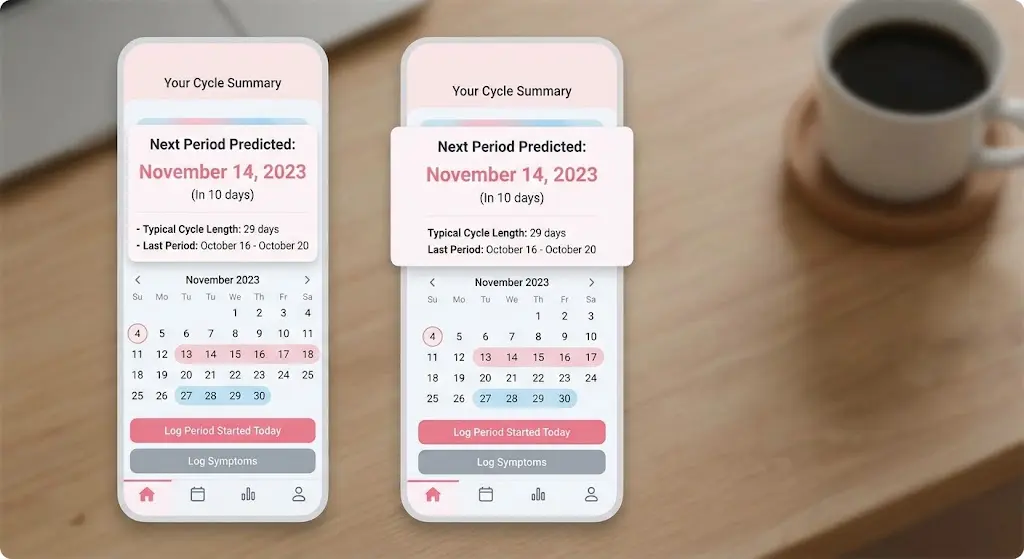
I now log spotting separately from my actual period in whatever app or calculator I’m using that month. Most decent tools let you flag a day as light or spotting instead of forcing it into the Day 1 slot.
A few things that have genuinely helped me:
- Wait for real flow, not just a trace, before marking Day 1.
- Note the color and whether you needed a pad or liner. That detail matters more than it seems.
- Log spotting days separately so your cycle length calculation doesn’t get thrown off.
- Use a free period calculator to double check your next predicted date once your real flow starts, especially if last cycle’s spotting confused things.
- Recheck your prediction again after two or three cycles, since one clean cycle of accurate logging tends to sharpen every estimate after it.
When Spotting Needs a Doctor’s Visit
Most spotting is harmless, but a few situations are worth getting checked out rather than waiting on:
- Spotting that shows up every single cycle for several months in a row
- Bleeding after sex on a regular basis
- Any bleeding after menopause, even light spotting
- Spotting along with pelvic pain, fever, or an unusual odor
- Spotting alongside a positive pregnancy test
Mayo Clinic is direct about that last point especially: postmenopausal bleeding is never considered normal and always warrants a medical evaluation. That’s not meant to scare anyone, it’s just the one scenario worth acting on instead of waiting out.
FAQs
Does spotting count as Day 1 of your period? No. Day 1 is the first day of real, steady flow that needs a pad, tampon, or period underwear. Spotting that happens before that point still belongs to your previous cycle.
Can spotting turn into a full period? Yes, spotting can lead directly into your period within a day or two. When that happens, Day 1 is still whichever day the flow became steady, not the day spotting started.
Is brown discharge before my period considered spotting? Yes. Brown discharge before your period is older blood leaving your body slowly. It’s a normal form of spotting and doesn’t count as your period starting.
How long can spotting last before it’s a concern? Spotting that clears up within a couple of days usually isn’t worrying. Spotting that continues for a week or longer, or that shows up every cycle, is worth mentioning to a doctor.
Should I log spotting in my period tracker? Log it, but not as Day 1. Most calculators and apps let you flag a day as light or spotting separately, which keeps your cycle predictions accurate.
Bottom Line
Spotting is your body’s way of doing something small, not necessarily starting something new. It’s real, it counts as a symptom worth noting, but it doesn’t count as your period. Wait for actual flow before you mark Day 1, and let a free period calculator handle the math once you do. Give it a try: Log your next real Day 1 into a free period calculator and see how much more accurate your predictions get once spotting is out of the equation.
Disclaimer: This article is for general informational purposes and isn’t a substitute for professional medical advice. If you’re experiencing unusual, prolonged, or concerning bleeding, talk to a doctor or gynecologist about your specific situation.