
Author Note: This article is based on my own experience tracking cycle symptoms for years, plus current guidance from OB-GYNs and major health systems. It’s written to help you recognize patterns, not to replace a visit to your doctor.
what does ovarian cysts pain feel like? For most women it starts as a dull, one-sided ache low in the belly that comes and goes with your cycle, though a ruptured or twisted cyst can cause a sudden, sharp pain that needs medical attention right away. The location, timing, and intensity all give clues about what’s actually going on.
Key takeaway: A steady, dull ache on one side that gets worse around ovulation or your period is usually a functional cyst. Sudden, sharp, one-sided pain with nausea or fever is not something to wait out.
The First Time I Noticed Something Was Off
I remember sitting at my desk one afternoon when a weird pulling sensation showed up on my left side, low enough that I first blamed it on a bad stretch at the gym. It wasn’t sharp. It was more like something was tugging at me from the inside every time I shifted in my chair. That ache stuck around for almost a week, always worse on that same side, and it finally sent me to my OB-GYN.
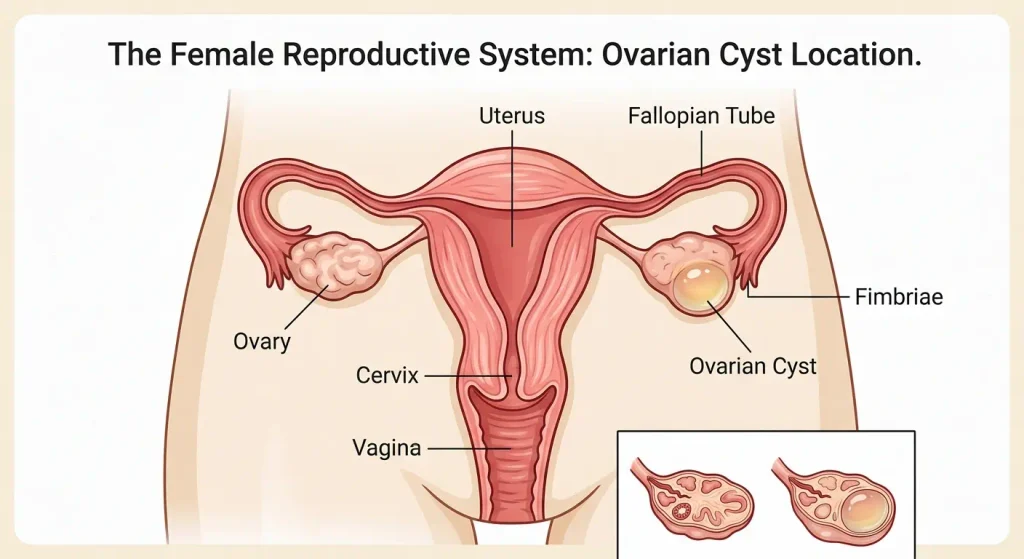
Turns out I had a functional ovarian cyst, the most common type, and one that usually resolves on its own within a few weeks. My doctor explained that these form when a follicle doesn’t release an egg the way it should, or doesn’t dissolve after it does, and fluid builds up instead. It sounded almost boring compared to how the pain actually felt.
So What Does It Actually Feel Like?
Here’s the part nobody explains well. Ovarian cyst pain doesn’t feel like one single thing. It changes depending on the size of the cyst, where it sits, and whether it’s stable or causing a complication.
Most women describe one of these patterns:
- A dull, heavy ache on one side of the lower belly that lingers for days
- A pulling or pressure feeling, like something is being tugged from inside
- Sharp, sudden pain that shows up out of nowhere, often during exercise or sex
- Cramping that feels similar to period pain but stays on one side
- A bloated, full sensation even when you haven’t eaten much
According to the Cleveland Clinic, having a cyst on your ovary genuinely feels different for every woman, which is part of why it’s so easy to write off as regular cramps or a stomach bug at first.
The Dull Ache That Comes and Goes
The most common version of ovarian cyst pain is a slow, dull ache that shows up around ovulation and eases off within a day or two. Doctors sometimes call this Mittelschmerz, a German term that basically means “middle pain,” since it lands in the middle of your cycle.
This kind of ache tends to stay on one side only, and that’s a genuinely useful clue. Regular period cramps usually sit in the center of your lower abdomen and pull toward your back. Cyst pain tends to camp out on the left or right and stay put.
I started noticing my own pattern only after I began logging my cycle day by day. Once you can see your ache lining up with ovulation on a calendar instead of just remembering it vaguely, the pattern gets a lot easier to trust. This is actually the exact experience that pushed me to build Free Period Calculator, so other women could track where they are in their cycle and notice when pain, bloating, or spotting keeps showing up at the same point every month instead of guessing.
When It Turns Sharp: Rupture and Torsion
Not every cyst stays quiet. Two situations turn a dull ache into an emergency.
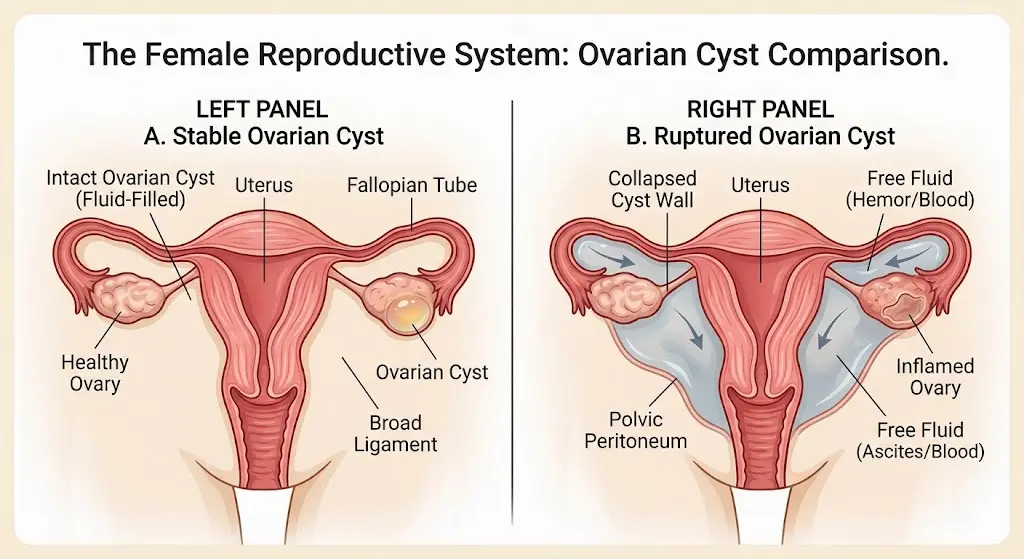
A ruptured cyst happens when the sac breaks open. Bon Secours describes this as a deep ache or pressure that builds quickly and can spread toward your lower back or thighs, often followed by bloating for a few days while your body absorbs the fluid. Most ruptures are manageable with rest and pain relief, but sudden severe pain paired with dizziness or fainting is a different story.
Ovarian torsion is rarer and more urgent. This happens when a larger cyst causes the ovary to twist around its own blood supply. The Cleveland Clinic notes that torsion causes sudden, severe pain along with nausea and vomiting, and it needs emergency care since the twisted ovary can lose blood flow.
Where You’ll Feel It
Location matters more than people expect. Since you have two ovaries, cyst pain is almost always one-sided, low in your pelvis, roughly where your hip bone meets your belly.
From what I’ve read and experienced, the pain can also radiate:
- Down into the inner thigh on the same side
- Toward the lower back
- Into the pelvis during or right after sex
If pain shows up dead center or moves around from side to side, it’s more likely regular cramping, gas, or something unrelated to your ovaries entirely.
How Cyst Pain Is Different From Regular Period Cramps
This is the comparison I get asked about the most, so here’s a simple breakdown.
| Feature | Regular Period Cramps | Ovarian Cyst Pain |
|---|---|---|
| Location | Center, radiates to back | One side only |
| Timing | Starts with your period | Can happen any time in your cycle |
| Feel | Squeezing, throbbing | Dull ache, pressure, or sudden sharp pain |
| Duration | A few days | Can linger for weeks if the cyst persists |
| Other symptoms | Mild bloating | Bloating, urinary pressure, pain during sex |
If your “cramps” are only ever on one side and don’t line up with the start of your period, that’s worth mentioning to your doctor.
What Made My Pain Easier to Track
I’ll be honest, the hardest part of figuring out what was going on with my body was not the pain itself. It was trying to remember, weeks later, whether the ache actually lined up with ovulation or if I was just imagining a pattern that wasn’t there.
Once I started logging cycle days, ovulation windows, and symptoms in one place, the pattern became obvious within two cycles. That’s exactly the gap Free Period Calculator was built to fill. It’s a simple tool for estimating your ovulation window and period dates, so when pain shows up you can check whether it’s landing mid-cycle, right before your period, or somewhere random that deserves a closer look.
When to Actually Call Your Doctor
Most ovarian cysts are harmless and go away on their own within a few menstrual cycles. But certain signs mean you shouldn’t wait it out.
Call your doctor or seek urgent care if you notice:
- Sudden, severe pelvic pain that comes on fast
- Pain along with fever, vomiting, or fainting
- Pain that lasts more than a few days or keeps getting worse
- Rapid breathing, clammy skin, or lightheadedness
- Heavy or unusual vaginal bleeding alongside the pain
The Cedars-Sinai health library notes that significant, worsening pain, especially on the right side, can also mimic appendicitis, so it always deserves a proper exam rather than a guess.
What Helped Me Manage It at Home
For the dull, manageable kind of ache, a few simple things actually helped while I waited for mine to resolve on its own.
- A heating pad on the lower belly for twenty to thirty minutes
- Over-the-counter pain relief like ibuprofen, taken with food
- Resting instead of pushing through workouts on bad days
- Tracking symptoms so I had real data to bring to my appointment
None of this replaces a diagnosis. It just made the waiting period more bearable once my doctor confirmed it was a simple functional cyst and not something that needed surgery.
FAQs
What does ovarian cyst pain feel like on the left side specifically? It usually feels like a dull, steady ache or pressure just above the hip bone, sometimes with a pulling sensation that gets worse when you move or during ovulation.
Can ovarian cyst pain feel like it’s in your lower back? Yes. Larger cysts or a rupture can send pain radiating toward the lower back, though the ache typically still starts on one side of the pelvis first.
Does ovarian cyst pain come and go, or is it constant? Both patterns happen. Functional cysts often cause pain that comes and goes with your cycle, while a rupture or torsion causes sudden pain that doesn’t ease up and needs medical attention.
Can you have an ovarian cyst with no pain at all? Yes, most cysts cause no symptoms at all and are only found during a routine pelvic exam or ultrasound for something unrelated.
Is ovarian cyst pain worse during ovulation? For many women, yes. This mid-cycle pain even has its own name, Mittelschmerz, and it lines up with the two week mark most cycle trackers flag as your ovulation window.
Conclusion
Ovarian cyst pain rarely announces itself clearly. It can feel like a nagging ache one week and disappear the next, which makes it easy to dismiss until it becomes hard to ignore. Paying attention to which side it’s on, when it shows up in your cycle, and whether it’s getting worse rather than better gives you and your doctor something real to work with instead of a vague complaint about stomach pain.
CTA: If you’re trying to figure out whether your pain lines up with ovulation or your period, track your cycle with Free Period Calculator and bring a few weeks of real data to your next appointment.
Disclaimer: This article is for general educational purposes only and is not a substitute for professional medical advice, diagnosis, or treatment. Always talk to a qualified healthcare provider about symptoms, diagnosis, or treatment for ovarian cysts.