
Hip pain with menstruation caught me off guard the first time it happened. I was already used to cramps, but this was different. It sat deep in my hip socket, sometimes only on one side, and it showed up like clockwork every month.
What Causes Hip Pain With Menstruation During Your Period
Hip pain during your period usually comes from prostaglandins, hormone-like chemicals that make your uterus contract. Those contractions can radiate outward to nearby nerves and muscles, including the ones that connect to your hip.
That single mechanism explains most cases. But it is not the only one, and if the pain is severe or one-sided every cycle, there is usually more going on underneath.
Why Period Pain Shows Up in Your Hip
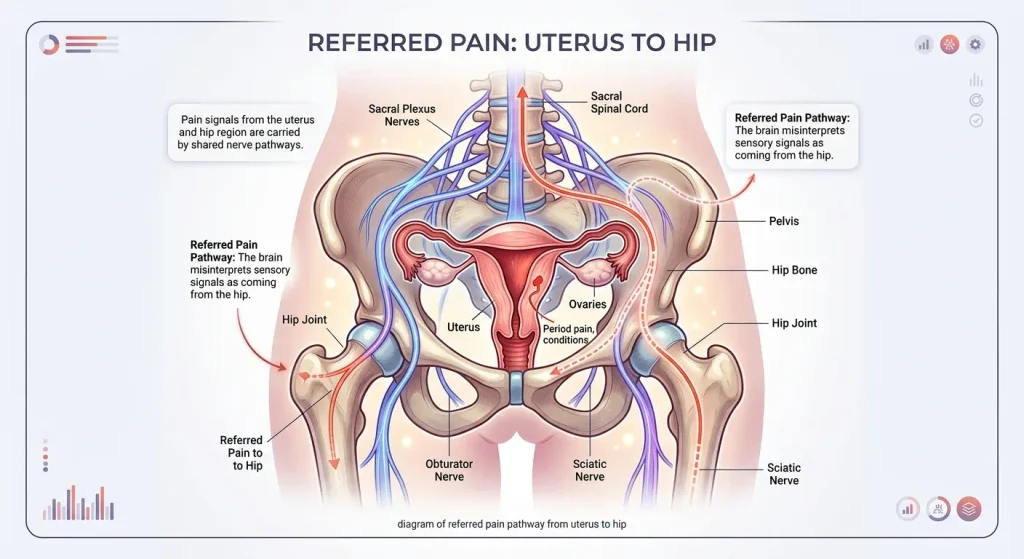
Your uterus, ovaries, and hip joints share nerve pathways in your pelvis. This is called referred pain. Your brain sometimes cannot tell exactly where a signal started, so it interprets uterine cramping as hip discomfort instead.
I noticed this myself. My cramps were mild some months, yet my hip still ached. A physical therapist explained that the pelvic floor muscles tighten during menstruation, and tight pelvic floor muscles pull on the hip flexors. That single sentence explained years of confusion.
Common Conditions Linked to Hip Pain
Most hip pain during menstruation falls into one of these categories.
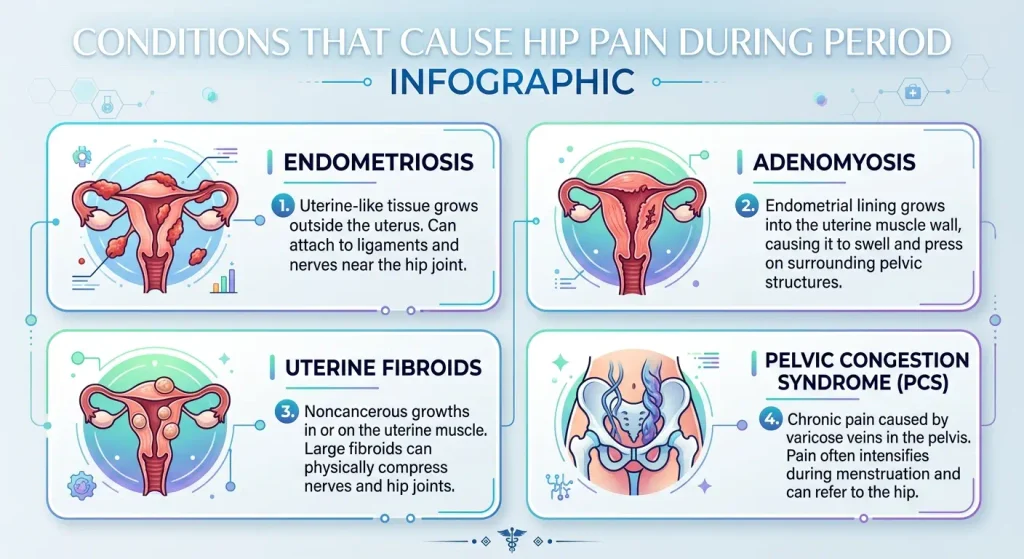
Dysmenorrhea (painful periods). This is the most common cause. Prostaglandin-driven cramping spreads to the lower back and hips.
Endometriosis. When uterine-like tissue grows outside the uterus, it can affect nerves near the hip and sciatic region. According to people with endometriosis may find the pain so intense it disrupts daily routines, and the condition happens when endometrium-like cells grow outside the uterus and attach elsewhere. If your hip pain comes with pain during bowel movements or sex, mention endometriosis to your doctor.
Adenomyosis. This condition can cause back pain that worsens before or during your period, and happens when uterine lining tissue grows into the muscular uterine wall. The referred pain pattern is similar to what happens with hips.
Ovarian cysts. Ovarian cysts can lead to leg and hip pain that shows up on the same side as the affected ovary, since the discomfort travels along shared nerves.
Key takeaway: One-sided hip pain that repeats every cycle is more likely tied to a specific condition like a cyst or endometriosis than to ordinary cramps.
Is It Your Period or Something Else
Not every ache lines up with your cycle. Here is a quick way to tell the difference.
- Period-related hip pain usually starts a day or two before bleeding and fades within a few days.
- It often comes with cramping, bloating, or lower back pain at the same time.
- Pain from a hip joint problem, like bursitis or arthritis, tends to worsen with walking or standing regardless of your cycle day.
I used to assume every hip twinge was hormonal. Tracking dates for two cycles showed me it was not always true. Some of it was from an old running injury that just felt worse when my pain tolerance dropped before my period.
Relief Tips That Actually Help
These are the methods that made the biggest difference for me and that doctors commonly recommend.
- Heat therapy. A heating pad on the hip and lower abdomen relaxes the muscles pulling on the joint.
- Gentle stretching. Figure-four stretches and hip flexor stretches ease the pull from tight pelvic muscles.
- Magnesium. Many people notice less cramping and referred pain with regular magnesium intake, though results vary.
- NSAIDs. Ibuprofen reduces prostaglandin production, which can ease both cramps and the hip ache that comes with them.
- Short walks. Light movement keeps blood flowing to the hip and often beats lying still.
None of these fixed the pain completely for me, but combined they cut it down enough to get through the day without missing plans.
When to See a Doctor
See a doctor if your hip pain during menstruation:
- Lasts longer than your period itself
- Comes with fever, heavy bleeding, or fainting
- Only happens on one side every single cycle
- Gets progressively worse over several months
- Does not respond to over-the-counter pain relief
The most common symptoms of endometriosis are pain and infertility, so pain that keeps escalating is worth a proper evaluation rather than waiting it out.
Tracking the Pattern
The biggest shift for me came from actually tracking when the hip pain started relative to my cycle. Once I could see the pattern on paper, it was easier to describe to my doctor and easier to plan around.
I use the free period calculator on my own site for this. It predicts your next cycle and fertile window, which made it simple to log whether my hip pain showed up two days before my period every time or if it was random. If you want to try mapping your own pattern before your next appointment, the free period calculator is a fast way to start.
FAQs
Is hip pain a normal period symptom?
Yes, mild hip pain can be a normal part of menstrual cramping caused by prostaglandins. It usually fades within a few days of your period starting.
Why is my hip pain only on one side during my period?
One-sided hip pain often points to referred pain from an ovarian cyst or endometriosis on that side. If it repeats every cycle, tell your doctor.
Can birth control help with period-related hip pain?
Hormonal birth control can reduce prostaglandin levels and cramping, which often eases the hip pain that comes with it. Results depend on the underlying cause.
When should I worry about hip pain with my period?
Worry if the pain is severe, one-sided every month, or paired with fever, heavy bleeding, or pain during sex or bowel movements. These signs warrant a doctor visit.
Conclusion
Hip pain with menstruation is common and usually harmless, tied to the same prostaglandins that cause cramps. But when it is sharp, one-sided, or getting worse each month, it is worth checking for endometriosis, adenomyosis, or an ovarian cyst rather than brushing it off.
CTA: Track your next cycle with the free period calculator so you can spot your own hip pain pattern before your next doctor visit.
Disclaimer: This article is for general information only and does not replace medical advice. Talk to a licensed healthcare provider about any persistent or severe hip pain during your period.