
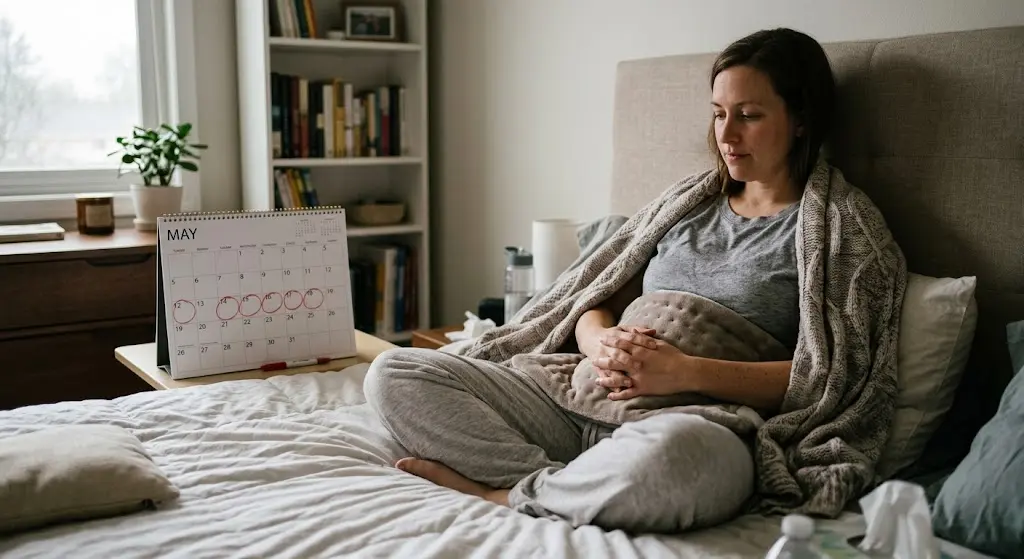
Predmenštruačný syndróm caught me off guard the first time I actually paid attention to it. I was twenty six, snapping at my husband over a dish left in the sink, crying at a dog food commercial, and convinced something was seriously wrong with me. Turned out I was just a week away from my period, same as clockwork, and I had never bothered to connect the dots.
That’s the thing about PMS. It sneaks up disguised as a bad mood, a bad week, or a bad relationship, when really your hormones are just doing their monthly dance.
Table of Contents
- What Is PMS
- Common PMS Symptoms
- What Causes PMS
- How I Started Tracking My Own Patterns
- PMS vs PMDD: When Symptoms Are More Than Typical
- What Actually Helps
- When to See a Doctor
- FAQs
What Is PMS
Predmenštruačný syndróm is a group of physical and emotional symptoms that shows up in the one to two weeks before your period and fades once bleeding starts. Research suggests as many as three out of four menstruating women have experienced some form of it, though the intensity ranges from barely noticeable to genuinely disruptive.
Common PMS Symptoms
No two women get the exact same list, but a few symptoms show up again and again.
Physical symptoms:
- Bloating and water retention
- Sore or tender breasts
- Headaches
- Fatigue
- Cramping before bleeding even starts
- Changes in appetite or food cravings
Emotional symptoms:
- Irritability
- Mood swings
- Anxiety or feeling on edge
- Trouble concentrating
- Crying more easily than usual
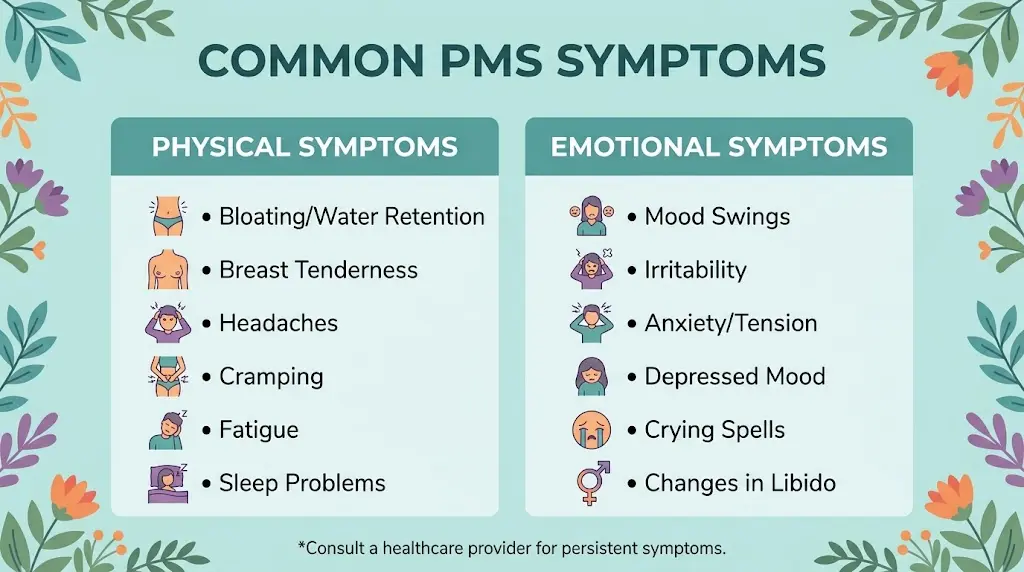
Key takeaway: PMS symptoms follow a pattern tied to your cycle, not random bad days. If you can predict them, you can usually plan around them.
What Causes PMS
Doctors still don’t have one clean answer here. The leading theory points to the natural rise and fall of hormones during the menstrual cycle, and a drop in estrogen appears to affect brain chemicals like serotonin, which can throw off sleep and mood in the days before your period. Genetics and stress levels seem to play a supporting role too, even if they aren’t the root cause.
How I Started Tracking My Own Patterns
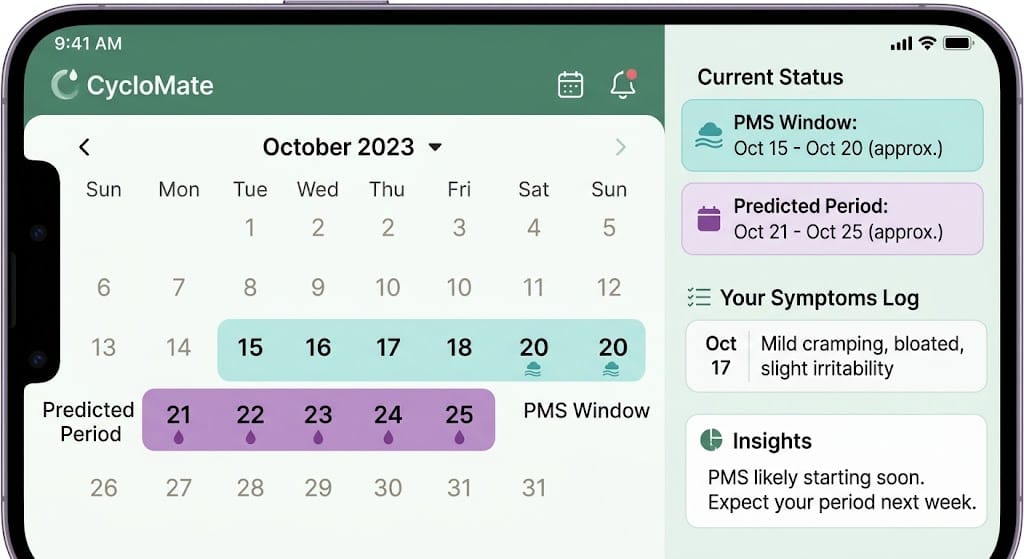
The turning point for me wasn’t a doctor’s appointment. It was a plain old calendar. I started marking down the day my mood shifted and the day my period actually arrived, and after three months the pattern was impossible to miss. My irritable, snappy, cry-at-commercials self showed up like clockwork nine or ten days before my period, every single time.
Eventually I got tired of doing it on paper and started using our Free Period Calculator to log my cycle and predict when the PMS window was coming. It’s a small thing, but knowing “PMS is probably starting Thursday” instead of being blindsided by it changed how I handled everything from work meetings to date night. If you’re a visual person, seeing the pattern mapped out does more for you than trying to remember it in your head ever will.
PMS vs PMDD: When Symptoms Are More Than Typical
Most PMS is annoying but manageable. A smaller number of women deal with something more severe called premenstrual dysphoric disorder, or PMDD. PMDD involves at least five premenstrual symptoms so intense they cause real distress and get in the way of work, school, or relationships, not just a rough week. Symptoms can include hopelessness, intense anger, or panic attacks that feel out of character.
If what you’re dealing with sounds closer to that description than typical PMS, it’s worth bringing up with a doctor rather than pushing through it alone. A friend of mine spent almost two years assuming she just had a short temper before a coworker mentioned PMDD to her. Once she started tracking her symptoms against her cycle, the pattern was obvious, and treatment actually helped within a few months.
What Actually Helps
I tried a lot of things that didn’t do much before I found what actually worked for me. Here’s what’s backed by more than just internet hype.
Move your body, even a little. Regular aerobic activity like walking, swimming, or biking is one of the most consistently recommended lifestyle changes for easing PMS symptoms. You don’t need a gym membership. A 20 minute walk most days does more than people expect.
Watch salt, caffeine, and alcohol during the week before your period. Cutting back on salty foods helps reduce the bloating and fluid retention that make everything feel worse, and caffeine tends to amplify anxiety and irritability rather than help it.
Eat smaller meals more often. Smaller, more frequent meals built around complex carbohydrates like fruits, vegetables, and whole grains can ease bloating and the feeling of fullness, and they help keep blood sugar steadier than three big meals a day.
Consider over the counter pain relief for physical symptoms. NSAIDs such as ibuprofen or naproxen, taken before or at the start of your period, can ease cramping and breast tenderness.
Talk to a doctor about SSRIs if mood symptoms are severe. For more intense PMS or PMDD, SSRIs are considered a first line treatment and can be taken daily or only during the two weeks before your period. This isn’t a first step for mild symptoms, but it’s a legitimate option worth knowing about.
A mistake I made early on was assuming supplements alone would fix everything. Chasteberry has shown some benefit for physical symptoms like bloating and breast pain in research, though it appears less effective for mood related symptoms than prescription options. Supplements can help around the edges, but they’re rarely a complete solution on their own, and it’s worth talking to a doctor before adding one, especially if you’re on other medication.
Sleep matters more than people give it credit for. PMS already messes with sleep quality, and short sleep makes irritability and food cravings worse the next day. Protecting even seven hours during your PMS window tends to soften everything else on this list.

When to See a Doctor
To formally diagnose PMS, doctors generally look for a pattern of symptoms present in the five days before your period for at least three cycles in a row. If your symptoms are severe enough to disrupt work, relationships, or daily functioning, or they don’t let up once your period starts, it’s time to loop in an ob-gyn instead of guessing on your own.
FAQs
How long before my period do PMS symptoms usually start? Most women notice symptoms starting one to two weeks before their period and fading within a few days after bleeding begins.
Is PMS the same as PMDD? No. PMS is common and generally manageable, while PMDD is a more severe form involving at least five intense symptoms that significantly disrupt daily life.
Can diet actually change how bad my PMS is? Yes, to a meaningful degree. Cutting salt, caffeine, and alcohol while eating smaller, complex carb rich meals is one of the most reliably helpful changes.
Do I need to see a doctor for PMS? Not for mild symptoms. See a doctor if symptoms are severe, don’t follow a predictable pattern, or interfere with your ability to function.
Conclusion
PMS is common enough that it’s easy to dismiss, but that doesn’t mean you have to just white knuckle it every month. Once you know your pattern, whether through a paper calendar or a tool like our Free Period Calculator you can plan around the rough days instead of being ambushed by them.
Ready to track your own cycle and see your PMS pattern for yourself? Try our freeperiodcalculator.com and start spotting the pattern this month.
Disclaimer: This article is for general informational purposes only and is not a substitute for professional medical advice, diagnosis, or treatment. Always talk to a qualified healthcare provider about your specific symptoms before starting any new treatment or supplement.