
Author Note: This article draws on published research from OB-GYN sources and a large-scale 2023 cycle-tracking study, combined with the kind of questions real readers ask when their period stops behaving the way it used to.
Why is my menstrual cycle getting longer is one of those questions you Google at 11pm after staring at a period tracker app that no longer makes sense. Mine used to arrive like clockwork every 27 days. Then one month it was 31. The next it was 34. I remember sitting on my bathroom floor doing math in my head, convinced something was seriously wrong.
What Counts As a Longer Cycle
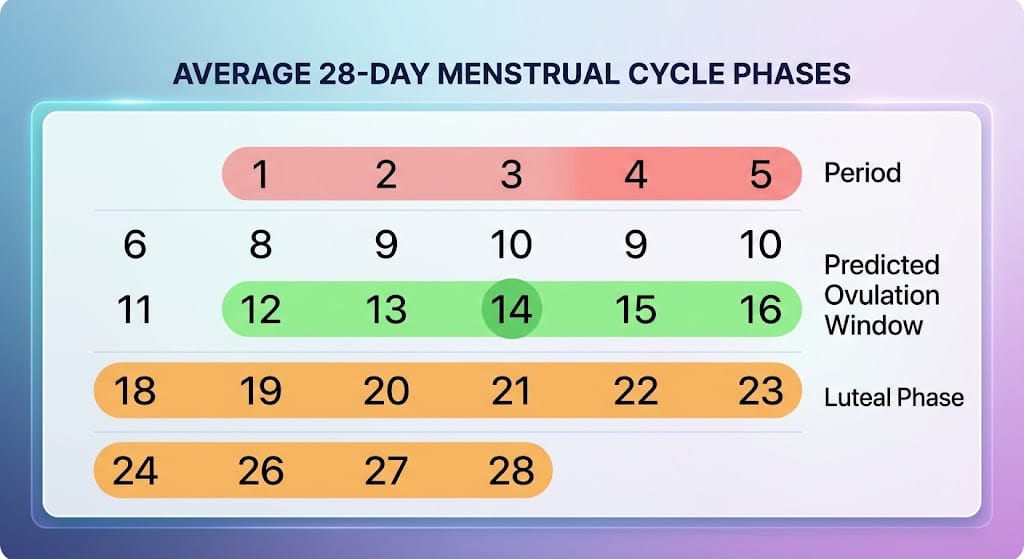
A menstrual cycle is counted from the first day of one period to the first day of the next, not just the days you bleed. Most doctors consider anything between 24 and 38 days normal, with 28 days often cited as an average, though very few women actually land on exactly 28 every single time.
A 2023 study published in Nature that tracked over 165,000 cycles from more than 12,000 women in the US found that cycle length actually gets shorter with age through most of your 20s and 30s, then starts stretching back out again after 50. So if your cycle has been creeping longer in your late 30s or 40s, you are not imagining it.
What Causes a Longer Menstrual Cycle
A longer menstrual cycle usually means ovulation is happening later than usual or not every month. Common causes include stress, significant weight changes, thyroid problems, PCOS, recently stopping birth control, and perimenopause, which is the most frequent reason for women over 35.
Key takeaway: A cycle that stretches out by a few days here and there is normal. A pattern that keeps growing month after month is your body’s way of flagging something worth checking.
Stress and Sleep Are Bigger Culprits Than You Think
The year I switched jobs, my cycle stretched from 27 days to almost 35. I blamed everything except the obvious answer. Chronic stress raises cortisol, and cortisol can delay the hormone signal that triggers ovulation. Less sleep does the same thing.
This is the cause doctors mention least in clinical write-ups, probably because it sounds too simple to be true. But talk to enough women and you will hear the same story. A brutal semester, a divorce, a new baby with zero sleep, and suddenly a period that used to show up like a scheduled meeting starts wandering.
Beginner mistake: assuming a late period always means pregnancy or a serious health issue. Sometimes it just means your nervous system has been running on empty for six weeks.
Weight Changes and Your Cycle
Both losing and gaining a noticeable amount of weight can lengthen your cycle. Fat tissue produces estrogen, so a fast drop in body fat can lower estrogen enough to delay ovulation. On the other end, higher body weight is linked to longer, less predictable cycles because of how it affects insulin and hormone signaling.
This does not mean every longer cycle is weight related. It just means it is worth mentioning to your doctor if you have had a big weight shift in the last few months.
Coming Off Birth Control
If you recently stopped the pill, an IUD, or the shot, your cycle can take anywhere from a few weeks to several months to settle into its natural rhythm. Hormonal birth control suppresses your natural cycle, so your body needs time to relearn the pattern it had before.
I went through this after switching from the pill to a copper IUD, and my first “real” cycle in years came in at 33 days. My second was 26. It took about four months to find something closer to consistent.
read our full guide on tracking your cycle after stopping birth control
Thyroid Issues and PCOS
Your thyroid gland helps regulate the hormones that control ovulation, so an underactive or overactive thyroid can stretch out your cycle length. A simple blood test can rule this in or out.
Polycystic ovary syndrome (PCOS) is another common cause, affecting an estimated 8 to 13 percent of women of reproductive age according to the World Health Organization. PCOS can prevent regular ovulation, which means cycles often run long or become unpredictable altogether.
Perimenopause: The Most Common Reason After 35
If you are in your late 30s, 40s, or approaching 50, perimenopause is worth putting near the top of the list. As estrogen production starts to decline and become less consistent, ovulation gets pushed later, and cycles start stretching out, sometimes by a week or more.
This is usually gradual. You might notice a cycle that used to run 27 days is now 30, then 33 a few months later. According to research on demographic cycle patterns, cycle variability increases by roughly 45 percent for women in their late 40s compared to women in their late 30s, which lines up with what most women describe as their cycles becoming genuinely unpredictable for the first time in years.
Image suggestion: A simple line graph showing cycle length variability increasing with age after 40. Alt text: graph showing menstrual cycle length changes during perimenopause
What Actually Helped Me Track the Pattern
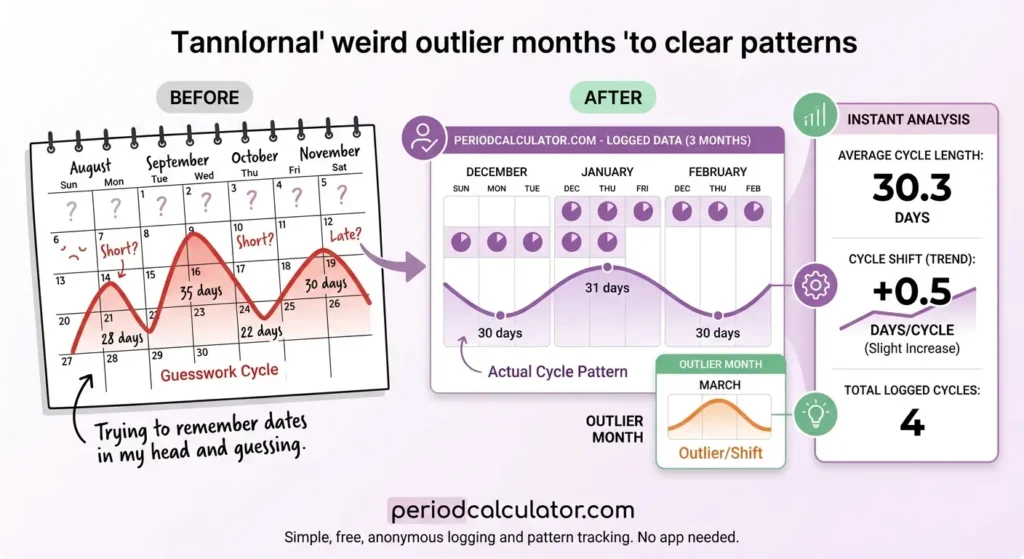
I stopped trying to remember dates in my head and started logging every cycle, including the weird outlier months. Within three months I could actually see the pattern instead of guessing.
If you want a simple way to do this without downloading another app, our free tool at periodcalculator.com lets you log your dates and instantly see your average cycle length and how much it has been shifting. It is the exact kind of tracking I wish I had started years earlier instead of trying to do the math myself every month.
When to Call Your Doctor
Most longer cycles are not an emergency. But a few signs mean it is worth booking an appointment rather than waiting it out:
- Cycles longer than 38 days for three months in a row
- Periods that suddenly stop for 90 days or more without pregnancy
- Very heavy bleeding, passing large clots, or soaking through a pad in an hour
- New or severe pain that was not part of your normal cycle before
- Any bleeding after sex or between periods that is new for you
According to the American College of Obstetricians and Gynecologists, persistent cycle irregularity is one of the more reliable early signs of an underlying hormonal or thyroid condition, which is why it is worth investigating rather than dismissing.
FAQs
Is a 40 day cycle normal? A single 40 day cycle occasionally is usually not a concern, especially after stress, illness, or travel. If it happens three cycles in a row, it is worth mentioning to your doctor.
Can stress alone make your period late by two weeks? Yes. High stress delays the hormone surge that triggers ovulation, which pushes back your period by days or even weeks in some cycles.
Does a longer cycle mean I am starting menopause? Not necessarily, but it is one of the earliest and most common signs of perimenopause in women over 35, especially when paired with more unpredictable timing.
Should I track my cycle even if it seems irregular? Yes. Tracking is actually more useful when your cycle is irregular, since it is the only way to spot whether the pattern is getting longer, shorter, or staying within a normal range.
Final Thoughts
A cycle that is getting longer feels alarming mostly because it breaks a pattern you have relied on for years. Most of the time the explanation is something ordinary like stress, a weight change, coming off birth control, or the early stages of perimenopause. The exception is when the change is sudden, extreme, or paired with other symptoms, which is when a doctor visit matters more than a Google search.
CTA: Start logging your next few cycles with our free period calculator so you can see your actual pattern instead of guessing at it.