
You notice some light spotting a few days before your period is due. Is it just an early period, or could it be something else entirely? If you’ve ever typed implantation bleeding vs period into a search bar, this guide is for you.
This is exactly why so many people search implantation bleeding vs period every month. It is one of the most asked questions on pregnancy forums, and for good reason. The two can look almost identical at first glance, but there are real differences once you know what to look for.
In this guide, we’ll break down color, timing, flow, and symptoms so you can figure out what’s actually going on with your body
Before we dig into the details, a quick reality check: spotting close to your period date is incredibly common, and most of the time it turns out to be nothing alarming. A short episode of light bleeding can be a normal period that’s simply lighter than usual, a small hormonal blip, or implantation bleeding. This guide exists to help you compare the clues calmly, not to feed anxiety. The more you understand the pattern, the less intimidating the question becomes.
Implantation Bleeding Symptoms to Watch For
Beyond the bleeding itself, a few accompanying symptoms help tilt the balance when you’re comparing implantation bleeding vs period. None of them alone confirms pregnancy, but together they create a pattern worth noticing.
- Very light, intermittent spotting. You may only see it when you wipe, and it can stop and start over a day or two rather than flowing continuously.
- Mild cramping. Lighter than your usual period cramps, often described as a faint pulling or twinge rather than a strong ache.
- Tender breasts. Many people notice breast sensitivity in early pregnancy, though it also happens before a normal period.
- Fatigue or mild nausea. Early hormonal changes can make you unusually tired, but again, this overlaps with PMS.
The honest truth is that early pregnancy symptoms and PMS symptoms overlap so heavily that you can’t rely on them alone. That’s exactly why the bleeding pattern itself, and its timing in your cycle, carries most of the weight in the implantation bleeding vs period comparison.
What Is Implantation Bleeding?
Implantation bleeding happens when a fertilized egg attaches to the lining of the uterus. In other words, the implantation bleeding vs period question is really a question about whether a pregnancy may have started. This usually occurs about 6 to 12 days after ovulation, which often lines up close to when a period would normally start.
It’s one of the earliest possible signs of pregnancy, though not everyone experiences it. For that reason, the implantation bleeding vs period comparison is never a guarantee on its own. Research suggests roughly 1 in 4 pregnant women notice some form of implantation spotting.
Why People Confuse It With a Period
The timing overlap is the main reason for the confusion. Understanding that overlap is the first step in the implantation bleeding vs period comparison. If your cycle is fairly regular, implantation bleeding can show up right around your expected period date.
That overlap makes it easy to assume it’s just your period showing up as usual, especially if the bleeding looks similar at first.
Key Differences: Implantation Bleeding vs Period
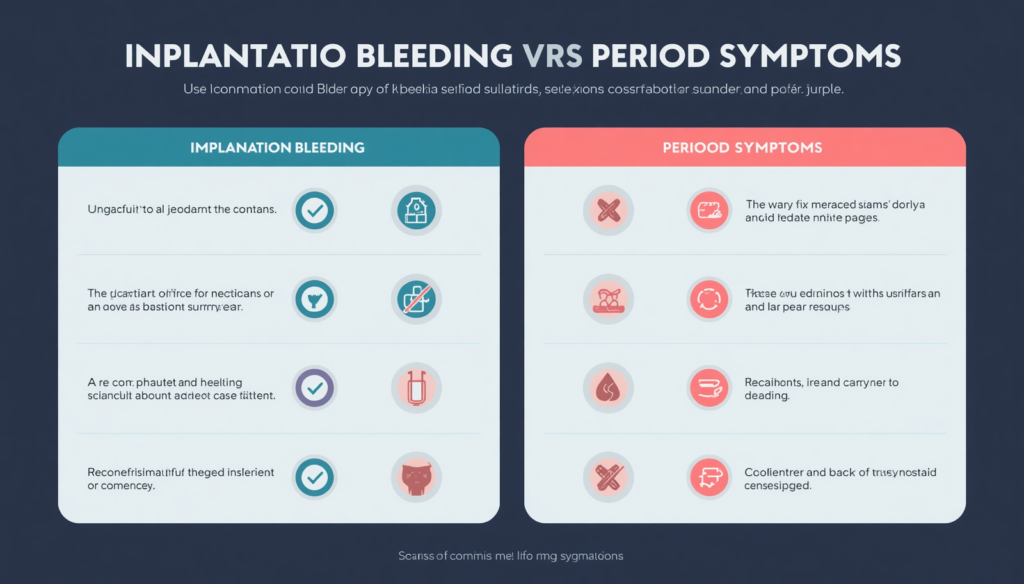
Here’s where the real differences show up. The implantation bleeding vs period chart above summarizes them in one glance. Once you compare them side by side, the pattern becomes a lot clearer.
Color
- Implantation bleeding is usually light pink or brown. Color is often the fastest way to start the implantation bleeding vs period comparison.
- Period blood typically starts brighter red and may darken over several days.
Flow
- Implantation bleeding is light, often just spotting on a pantyliner or toilet paper. Flow weight is a major signal in the implantation bleeding vs period comparison.
- Period flow is heavier and usually requires a pad or tampon, increasing for a day or two before tapering off.
Duration
- Implantation bleeding usually lasts anywhere from a few hours to three days. Duration is another reliable clue when comparing implantation bleeding vs period.
- A period typically lasts four to seven days.
Cramping
- Implantation cramps tend to be mild and short-lived. Lighter pain points the implantation bleeding vs period comparison away from a normal period.
- Period cramps are often stronger and can last the first few days of bleeding.
Clotting
- Implantation bleeding rarely includes clots. Clotting is a strong sign the bleeding is actually a period rather than implantation bleeding.
- Periods can include small clots, especially on heavier flow days.
Real-Life Example
Picture a woman in Texas with a consistent 28-day cycle. Her period usually starts on day 28, heavy from day one, with cramps that last two to three days.
One month, she notices light brown spotting on day 25, lasting less than a day, with barely any cramping. In her mind, the implantation bleeding vs period question feels urgent, but the clues are clear. That pattern, early, light, and brief, lines up much more closely with implantation bleeding than her usual period.
Now imagine the alternative: bleeding that starts exactly on day 28, brightens to a heavier red by day two, requires a pad, and comes with cramps she has to manage for two days. That picture is unmistakably her normal period. The contrast between the two months is the whole point of the implantation bleeding vs period comparison, the timing, color, and flow are simply different.
There’s one more scenario worth naming. If she takes a pregnancy test three days after the spotting and it’s negative, but her period never shows up, waiting a few more days and testing again is the sensible move. Hormone levels need time to rise enough for a home test to catch them, and a single early negative is not a definitive answer.
If she’s unsure, tracking the exact day against her normal cycle pattern gives her useful information either way.
How a Calculator for Periods Can Help You Compare
This is where a calculator for periods becomes genuinely useful, not just for predicting your next period, but for spotting when something looks off-schedule. If you know your average cycle length, you’ll immediately notice if bleeding shows up earlier than expected.
Here’s how to use it for comparison:
- Log your average cycle length from the past few months.
- Note the date your period is actually expected.
- Compare that date to when the spotting or bleeding started.
- If it’s several days early and looks different from your normal flow, it’s worth paying closer attention.
A calculator won’t diagnose anything, but it gives you the timeline you need to notice patterns instead of guessing. Combined with a pregnancy test, that timeline resolves most implantation bleeding vs period confusion.
When It’s Worth Taking a Pregnancy Test
If the bleeding looks lighter than usual and shows up earlier than your expected period, a pregnancy test can clear things up fast. Testing at the right time settles the implantation bleeding vs period question with real evidence. Most home tests are most accurate starting the day after a missed period, though some claim earlier detection.
Testing too early can sometimes give a false negative. That is why timing your test matters as much as the test itself in the implantation bleeding vs period comparison., even if you’re actually pregnant. If your first test is negative but your period still hasn’t started normally, testing again in a few days is a reasonable next step.
When to See a Doctor
Most light spotting is harmless, but a few signs are worth a phone call to your doctor. Safety matters even more than the implantation bleeding vs period label.
- Bleeding that’s heavy rather than light spotting
- Bleeding accompanied by severe pain
- Spotting that continues for more than a few days
- Any bleeding during a confirmed pregnancy, even if light
These don’t automatically mean something is wrong, but they’re worth getting checked rather than guessing at home.
Other Causes of Light Spotting
Implantation bleeding vs period isn’t the only comparison that confuses people. Light spotting can have several other causes, and knowing them stops you from jumping to conclusions too quickly.
- Ovulation spotting. A few days before your period, some people notice very light spotting at ovulation, around mid-cycle. This is typically pink and lasts less than a day.
- Hormonal shifts. Stress, travel, sleep changes, and starting or stopping birth control can all trigger light spotting that looks similar.
- Minor irritation. Intercourse or a pelvic exam can cause light spotting that’s completely harmless.
- Early period. Sometimes a period just starts a few days early with light flow before picking up, which muddies the comparison even more.
Because the causes overlap, the timing in your cycle becomes the most useful clue. If spotting appears well before your expected date and stays very light, the implantation bleeding vs period question deserves closer attention.
A Simple Timeline of Implantation Bleeding by Cycle Day
Walking through a typical cycle makes the differences concrete. On a 28-day cycle, ovulation usually happens around day 14. Implantation bleeding typically follows 6 to 12 days later, meaning days 20 to 26 of that cycle.
Your period, by comparison, usually starts on day 28. So the key question when you’re comparing implantation bleeding vs period is simple: did the bleeding show up one to eight days earlier than your period was due? If yes, and it’s light pink or brown, brief, and free of heavy cramps, the odds tilt toward implantation bleeding.
For a 30-day cycle, shift everything two days later. For a 26-day cycle, shift it two days earlier. If your cycles vary, that’s exactly where a reliable tracker removes the guesswork.
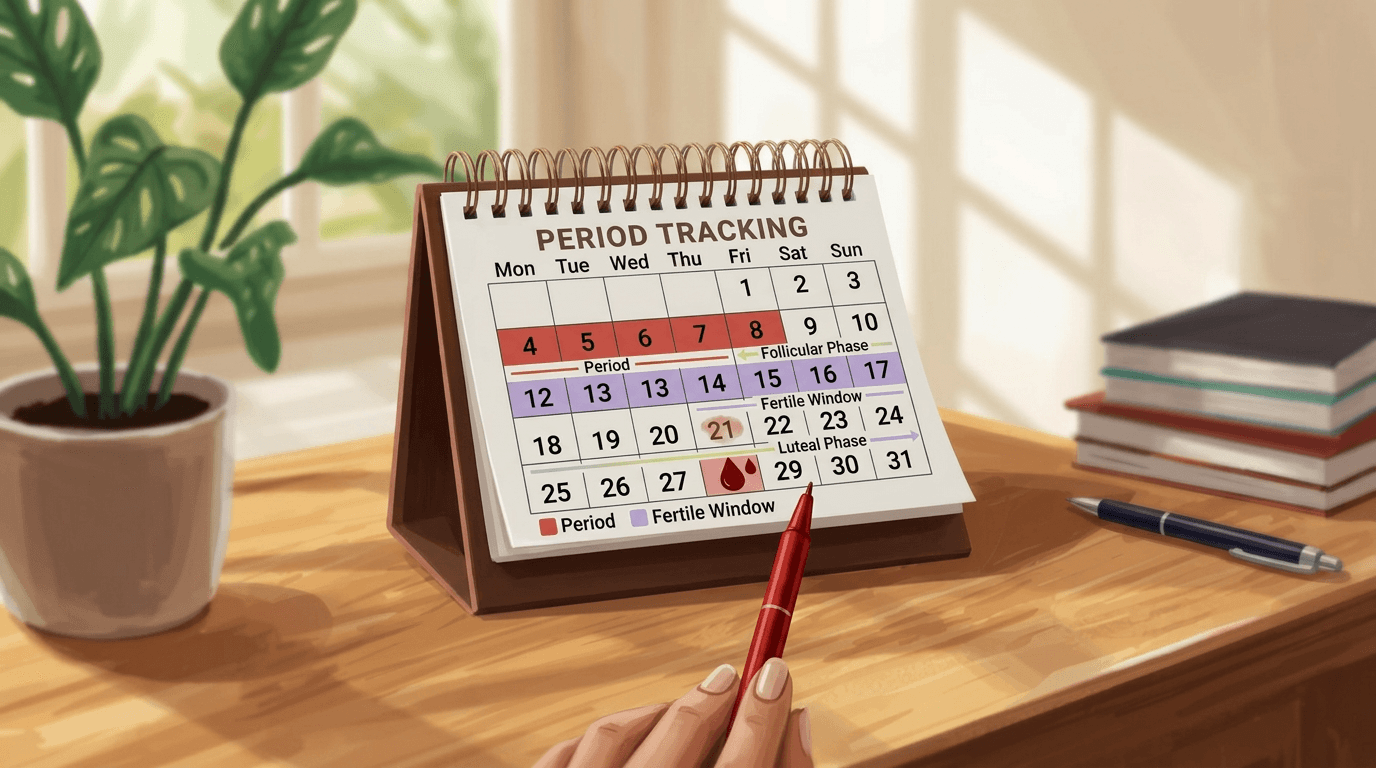
You can use the period calculator on this site to log your average cycle length and see your expected period date, which gives you a baseline to compare against. For more on what your body might be telling you, read about signs your period is coming late or explore common menstrual symptoms. For an authoritative medical reference on implantation bleeding, the American College of Obstetricians and Gynecologists and other national health organizations publish reliable patient education.
How to Track Spotting So You Can Compare Confidently
The fastest way to get clarity on the implantation bleeding vs period question is to record a few details the moment you notice spotting. Write them down in a notes app, a paper calendar, or your cycle tracker, because memory is unreliable when hormones and worry are involved.
- Date and time. What cycle day was it, and how many days before your expected period did the spotting begin?
- Color. Pink, light brown, dark brown, or bright red? Note whether it changes over time.
- Flow. Is it only visible on toilet paper, a pantyliner, or enough to fill a pad?
- Duration. Did it last hours, one day, or several days?
- Symptoms. Cramping, backache, tenderness, fatigue, or none at all?
Within a day or two you’ll usually have enough detail to see which side of the implantation bleeding vs period comparison you’re on. If the picture stays unclear, the checklist below gives you sensible next steps.
What to Do Next: A Simple Checklist
You don’t need to spiral into worry while you wait for clarity. Follow these steps in order and you’ll have an answer within a few days.
- Keep tracking your symptoms. Continue logging color and flow so you can describe them accurately if you call a doctor.
- Wait until your expected period date. If bleeding was early and stopped, watch whether a period still arrives on schedule.
- Take a pregnancy test at the right time. For the most reliable result, test the day after a missed period, or a few days after your spotting if your cycle is irregular.
- Repeat a negative test if needed. One negative test a week later is very reassuring. If your period still hasn’t come, consider testing again or checking in with a healthcare provider.
- See a doctor for red flags. Heavy bleeding, severe pain, or spotting that goes on for several days all deserve a professional opinion.
That’s really all there is to it. The implantation bleeding vs period comparison isn’t something you have to solve in a single panicked hour, a few days of careful observation gives you a clear, honest answer.
Is It Implantation Bleeding or Just a Light Period?
This is the most common reframe of the whole question, and it deserves its own answer. Sometimes a period is simply lighter than usual, and if you’re actively trying to conceive, your mind naturally wants to read more into it. That’s human, but the data still matters more than the hope.
Ask yourself two questions. First, did the bleeding arrive days earlier than your period normally starts? If you’re usually spot-on day 28 and the bleeding appeared on day 24, that’s unusual enough to notice. Second, did it look and behave differently, staying light, staying short, and staying brown or pink? A light period usually still flows for several days and may still build to a small surge on day two.
If both answers point to “yes, this was early and different,” then the implantation bleeding vs period comparison favors implantation bleeding, and a test timed for after your expected period date will give you a trustworthy answer. If your flow was basically normal but just a touch lighter, it’s far more likely to be a routine variation in your period.
Either way, the next cycle gives you more information. Track whether the same pattern repeats, whether your next period arrives on time, and how your body feels in between. Over two or three months, your own records become the most reliable guide you have.
Frequently Asked Questions
How many days before a missed period does implantation bleeding happen?
It typically occurs 6 to 12 days after ovulation, which often lands a few days to about a week before your period would normally start.
Is a calculator for periods the same as a periodic table?
No. A calculator for periods tracks your menstrual cycle and helps estimate your next period or fertile window. The periodic table of elements is a chemistry reference chart used in science class, listing elements like carbon and oxygen. They just happen to share the word “period.”
Can implantation bleeding be mistaken for a light period?
Yes, very easily. The biggest giveaway is usually the shorter duration and lighter flow compared to a typical period.
Does implantation bleeding always mean pregnancy?
Not necessarily. Light spotting can also happen due to ovulation, hormonal shifts, or minor irritation, so a pregnancy test is the only way to know for sure.
Should I worry if I don’t experience implantation bleeding at all?
No. Most pregnant women never notice implantation bleeding at all, so its absence doesn’t indicate a problem.
Does implantation bleeding happen before a missed period?
Yes, usually. Implantation bleeding typically appears 6 to 12 days after ovulation, which is often several days before your period is due. That early timing is one of the strongest clues when you’re weighing implantation bleeding vs period, because a real period usually starts on schedule.
Can implantation bleeding be heavy like a period?
Rarely. Implantation bleeding is normally light spotting that never turns into a heavy flow. If you’re filling a pad or tampon quickly, the bleeding is far more likely to be an actual period or a reason to see a doctor.
How long after implantation bleeding can I test positive?
If the bleeding you noticed was truly implantation bleeding, a home pregnancy test can detect the pregnancy hormone within a few days, and is most reliable starting the day after a missed period.
Final Thoughts
Telling implantation bleeding and a period apart comes down to paying attention to small details. When you combine color, flow, timing, and duration, the implantation bleeding vs period comparison becomes surprisingly clear., color, flow, timing, and how it compares to your normal cycle. None of it is guesswork once you know what to look for.
If you’re noticing unusual spotting, track the date against your expected cycle and consider a pregnancy test if the timing looks off. Whatever the outcome, you’ll have handled the implantation bleeding vs period question calmly and with good information. Your body is usually telling you something specific, you just need the right information to read it correctly.
Pingback: Two Periods in One Month: 12 Common Causes That Help