
Two periods in one month had me staring at a calendar app one night, recounting the days like I’d made a mistake somewhere. I hadn’t. My cycle had just decided to run short that month, and it took a fair amount of Googling to figure out whether that was normal or something to call a doctor about.
If you’re doing the same math right now, here’s what actually matters.
Quick Answer
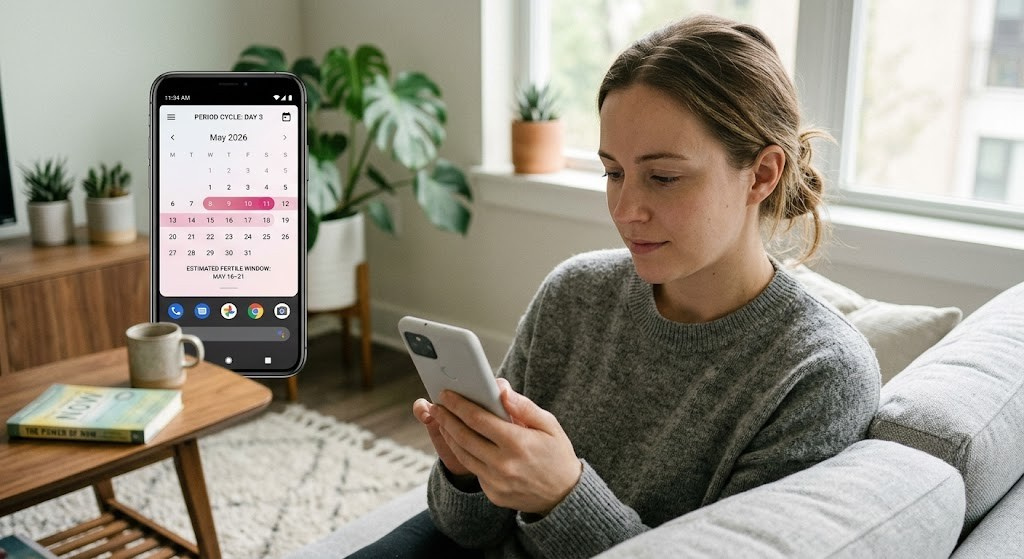
Getting your period twice in one month usually means your cycle is naturally short, not that something is broken. Understanding that framing is the mental shift most people need about the two periods in one month they just saw on their calendar. It’s worth a doctor’s visit only when the pattern is new, keeps repeating for two or three cycles, or shows up with heavy bleeding or pain.
Is It Normal to Have Two Periods in One Month?
Yes, having two periods in one month can be completely normal, especially if your cycle length falls between 21 and 24 days. It only becomes a concern when the pattern is new, keeps repeating, or comes with heavy bleeding, severe cramping, or unusual discharge.
A menstrual cycle is counted from the first day of one period to the first day of the next. According to Mayo Clinic, cycles typically run anywhere from 21 to 38 days, and a shorter cycle simply means your period lands earlier in the calendar the next time around.
Do the math on a 22-day cycle and you’ll see it: Do the arithmetic on your own average and the two periods in one month explanation becomes timing, not bad news. start on the 1st, and your next period can easily land before the month ends. Nothing is wrong here. It’s just arithmetic.
True Second Period vs. Spotting
Not every extra bleed is a full period. That distinction decides whether your two periods in one month really are two separate flows or something milder. This is the part most articles skip, and it’s the difference that actually helps you decide whether to worry.
A true second period means a full flow, similar in length and heaviness to your usual period, arriving less than three weeks after the last one started. Spotting, on the other hand, is light, brief, and often brownish or pink rather than red.
Key takeaway: A genuine second period in the same month is rare. Most “extra” bleeding turns out to be either a naturally short cycle or spotting, not two full periods back to back.
Spotting is commonly tied to ovulation, a new birth control method, or minor irritation, while a true second period points more toward a hormonal or structural cause worth checking. If you are unsure what you are looking at, our guide to implantation bleeding vs period walks through one of the most common mix ups behind a mid month bleed.
Common Causes
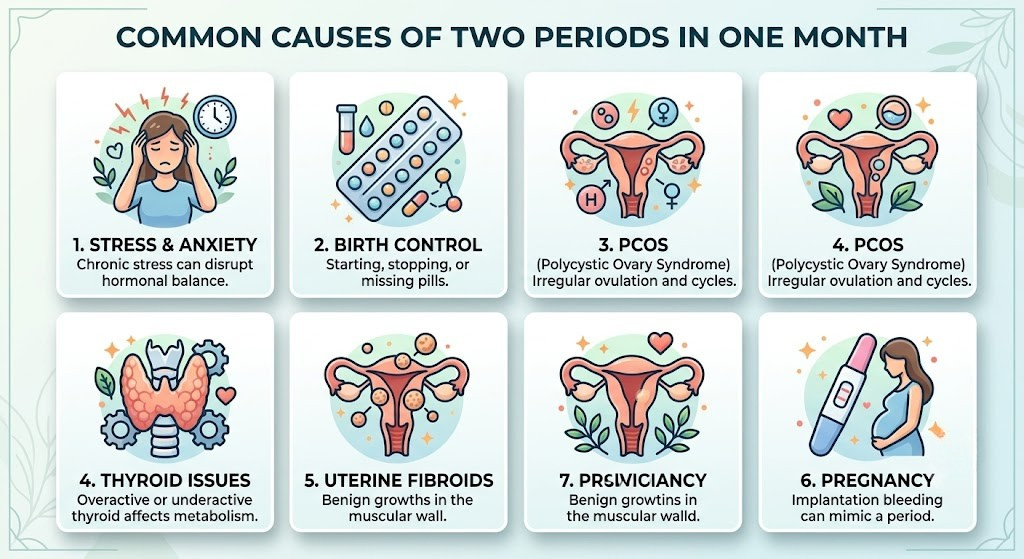
Here’s what typically explains two periods in one month, from most common to least.
A naturally short cycle. If your cycle has always run 21 to 24 days, two periods landing in one calendar month is just timing, not a red flag.
Puberty. Cycles are often irregular for the first year or two after periods start, since Cleveland Clinic notes hormone levels are still finding their rhythm.
Perimenopause. In the years leading up to menopause, cycles can shorten before they eventually space out and stop.
Stress or big lifestyle changes. Major stress, sudden weight loss or gain, illness, travel, or a jump in exercise intensity can all shorten a cycle for a month or two.
Starting or changing birth control. A new pill, a missed dose, or a recently placed IUD can all cause breakthrough bleeding that feels like a second period.
PCOS. Polycystic ovary syndrome throws off ovulation and hormone levels, which can shorten cycles or cause unpredictable bleeding.
Thyroid problems. Both an overactive and an underactive thyroid can shorten your cycle length, since thyroid hormone directly influences your reproductive hormones.
Uterine fibroids or polyps. These noncancerous growths can cause bleeding between periods that gets mistaken for a second period, particularly if the flow is heavy.
Endometriosis. Tissue similar to the uterine lining growing outside the uterus can trigger irregular bleeding along with pelvic pain.
Pregnancy-related bleeding. Early pregnancy, and less commonly a miscarriage or ectopic pregnancy, can cause bleeding that looks like a period.
Infections. Sexually transmitted infections and pelvic inflammatory disease can both cause bleeding outside your normal cycle, often with pain or unusual discharge.
Certain medications. Blood thinners, steroids, and some antipsychotics list irregular bleeding as a known side effect.
When to See a Doctor
Call your doctor if you notice any of the following:
- Two periods in one month happening for two or three months in a row
- Soaking through a pad or tampon every hour for two or more hours
- Passing blood clots larger than a quarter
- Bleeding between periods along with pelvic pain
- Dizziness, unusual fatigue, or shortness of breath, which can point to anemia
- Any chance you could be pregnant
Cleveland Clinic’s guidance on abnormal uterine bleeding lines up with all of the above. None of these symptoms are things to manage alone.
Two Periods in One Month: When It’s Just a Short Cycle
The most common explanation for two periods in one month is a naturally short cycle that happens to land at the start and the end of the same calendar month. That is not a medical problem, it is the calendar being arbitrary about where your cycle fits, and it tells you those two periods in one month probably are not worth losing sleep over.
Look at your own numbers rather than the month above your calendar. If your gap between bleeds is consistently 21 to 24 days, then the two periods in one month are simply your normal rhythm showing up twice before the page of a month turns. Track three or four cycles and you will see the pattern repeat in a boring, predictable way.
The reassuring detail is duration. A short cycle that gives you two periods in one month usually behaves like any other period: similar flow, similar number of days, and no dramatic symptoms. If instead the bleeding is heavier, far more painful, or arriving in a completely irregular muddle, that pushes you out of the “short cycle” story and toward the causes list above.
When Two Periods in One Month Feels Like Something Else
Sometimes the second bleed is not a period at all. Breakthrough bleeding from a new pill, ovulation spotting, a cervical polyp, or early pregnancy bleeding can all be mistaken for a second flow. The way to separate them is by amount and timing: true two periods in one month have a similar heaviness and length to your usual period, while the imposters tend to be lighter, shorter, and sometimes unevenly timed.
Implantation bleeding, for example, is typically very light and only lasts a day or two, which is why it rarely looks like a real flow. If you have any chance of pregnancy, this distinction matters a lot, so a pregnancy test is the fastest way to remove the guesswork before assuming your second bleed is just another period.
If the extra bleed keeps coming back, feels heavier than normal, or arrives with pelvic pain, note it down and mention it to your doctor. Repetition and severity are the two signals that separate an inconvenient calendar coincidence from something that deserves a closer look.
How to Track Two Periods in One Month Without Freaking Out
Tracking is the single most useful habit once you have seen one confusing month. Write down the first day of each bleed, the number of bleeding days, and any symptoms, then let a few cycles pile up before you judge anything. A single two periods in one month event is almost always noise; a repeated pattern is a signal.
Use your average cycle length rather than watching one calendar. When you know your own mean, you can predict whether two periods in one month will happen at all, because it is simply your average gap plus the calendar start. That takes a scary surprise and turns it back into ordinary tracking.
And choose a method you will actually keep. A paper calendar, a notes app, or the cycle calculator all work, as long as logging takes less than a minute, because the pattern matters more than the app you use to notice it happens twice.
A Quick Look at Common Causes You Should Not Ignore
Most reasons for two periods in one month are mild, but a few deserve genuine attention. If PCOS, thyroid disease, fibroids, polyps, or a pelvic infection are the cause, treating them tends to settle the cycle back into one normal rhythm, which is why the cause matters more than the count of bleeds in a month.
Heavy or painful a repeated two periods in one month can quietly lead to anemia over time, especially if the flows themselves are heavy. Signs like dizziness, unusual fatigue, or breathlessness on stairs are your cue to stop tracking and start treating with at least an iron check and a doctor appointment.
How Doctors Find the Cause
Before a doctor looks inside, they usually want a clear picture of your pattern, which is exactly why our menstrual symptoms guide and a short cycle log give them more to work with than a vague description.
A doctor usually starts with your cycle history and symptoms, then moves to:
- A pregnancy test, to rule out or confirm pregnancy-related bleeding
- A pelvic exam to check for tenderness or visible changes
- A pelvic ultrasound to look for fibroids or polyps
- Blood work to check thyroid function and hormone levels
This is usually enough to narrow down whether you’re dealing with a short natural cycle, a hormonal shift, or something structural that needs treatment.
What Treatment Looks Like
Treatment depends entirely on the cause. A naturally short cycle needs no treatment at all, just consistent tracking with a tool like the global period calculator to watch your cycle length over time.
If hormone imbalance is behind it, hormonal birth control is often used to regulate cycle length and reduce breakthrough bleeding. If fibroids or polyps are found, treatment ranges from monitoring to a minor procedure, depending on size and symptoms. If frequent periods have led to anemia, iron supplements are typically added alongside whatever treats the underlying cause.
Why Your Body Can Honestly Give You Two Periods in One Month
It is worth repeating the one idea that resolves most of the anxiety around this. A period is not triggered by the calendar hanging on your wall; it is triggered by your cycle length. If that length is short, you can legitimately see two periods in one month without any illness, injury, or imbalance, and it is simply a scheduling property of a fast rhythm.
Consider a woman whose cycle runs for 22 days. Her January period starts on the 2nd, the next one lands near the 24th, and the third one starts on February 15th. In a month that begins on the 1st, two periods in one month will show up whenever the calendar happens to capture a start date on the first and then again later in that same short collection of days.
What makes people panic is that the two close starts feel like a sudden change even when nothing changed. The body kept its rhythm; only the month’s boundaries moved. That is the sneaky core of most two periods in one month worries, and why keeping a start date log longer than a single month is a reassuring and simple habit.
To decide if your two periods in one month deserve attention, run a quick self check: Did the two flows look about as heavy and last about as long as your normal period? Did your cycle previously run around 21 to 24 days? Is there no pelvic pain or dizziness? If all are true, you are almost certainly within a healthy short cycle.
The Gold Rule for Two Periods in One Month
Borrow a rule you can lean on: treat a single occurrence as noise and a repeating pattern as a reason to talk to someone. An occasional two periods in one month that is otherwise painless rarely needs treatment, but a pattern that keeps returning, especially with heavy flow, big clots, severe cramps, or tiredness, is a flag that deserves a professional opinion rather than another month of guesswork.
Cycle Length Checker
Want a quick, judgment-free read on your own numbers? Enter the start date of your last two bleeds in the Cycle Length Checker widget below and the tool will tell you where that gap falls compared to a typical cycle.
FAQs
Is it normal to have two periods in one month? Yes, it can be normal if your cycle naturally runs on the shorter side, especially between 21 and 24 days. It only raises concern when it happens suddenly, repeats for two or three months in a row, or comes with heavy bleeding or pain.
Can stress cause two periods in a month? Stress can shift your hormone levels enough to shorten a cycle for one month. This is usually temporary, and your period should return to its normal pattern once your stress levels settle down.
Can birth control cause two periods in a month? Starting, stopping, or missing doses of hormonal birth control can trigger breakthrough bleeding that feels like a second period. A new IUD can cause similar spotting during the first few months.
Does getting two periods in a month mean I’m pregnant? Not usually, but early pregnancy can cause light bleeding that looks like a period. If there’s any chance you’re pregnant, take a home pregnancy test and call your doctor if bleeding is heavy or painful.
How many periods in a month is too many? More than two full periods in one month, or cycles that consistently run shorter than 21 days, is a pattern called polymenorrhea. It’s worth a conversation with your doctor rather than something to manage alone.
When should I see a doctor about frequent periods? See a doctor if this happens for two or three months in a row, if you’re soaking a pad or tampon every hour, passing clots larger than a quarter, or feeling dizzy or unusually tired.
How many days between periods is too short? A cycle shorter than 21 days, measured first day to first day, is considered short and can naturally produce two periods in one month. If the gap is consistently under 21 days or the blood is heavy, it is worth being checked rather than assumed normal.
Is it dangerous to have two periods in one month every now and then? Not usually, especially if each bleed looks like your normal period. Occasional two periods in one month events from stress, travel, or a short cycle are common. It only becomes cause for concern when it repeats two or three months in a row or comes with heavy flow, clots, pain, or fatigue.
Does having two periods in one month make it harder to get pregnant? Not because of the extra bleed itself, but anything that causes frequent ovulation can affect how you plan a conception. Because a shorter cycle often means you ovulate earlier than usual, it can be trickier to time intercourse if you rely only on a calendar. If you are trying to conceive and notice recurring two periods in one month, tracking ovulation signs gives you a much clearer plan than guessing.
Should I take an iron supplement after two periods in one month? If you have had heavy flows for a couple of cycles, blood loss can quietly lower your iron. General advice is to ask first before supplementing, since some people store too much iron. A doctor can run a quick ferritin check, then you know whether your two periods in one month have created an actual deficiency or just a minor worry that needs no pills.
Conclusion
Two periods in one month is unsettling the first time it happens, but it’s rarely an emergency. Most of the time it’s a short natural cycle, stress, or a birth control adjustment settling itself out. The pattern to watch for is repetition: one odd month is usually noise, three in a row is a signal.
Count your own gap between bleeds rather than trusting a fear filled guess. If you see the two periods in one month happen in sync with a 21 to 24 day cycle, you can file it under normal timing. If the pattern repeats, the flow seems heavier, or more pain appears, that is the exact moment to move from tracking to asking a doctor why you keep getting two periods in one month.
Track your next couple of cycles, and if the pattern repeats or comes with heavy bleeding, pain, or fatigue, book a visit with your doctor. Think of those two periods in one month you recorded as single data points, and watch whether they form a real pattern or fade back into a normal if rare month.
This article is for general information only and isn’t a substitute for professional medical advice, diagnosis, or treatment. Always talk to a qualified healthcare provider about any change in your menstrual cycle.
Pingback: Period Test: 8 Simple Clues That Help You Predict Your Period
Pingback: Period Calculator: 9 Easy Ways That Help You Track Your Cycle
Pingback: Why Is My Period So Light: 9 Simple Reasons That Help
Pingback: Cramps But No Period: 13 Easy Reasons That Help You Understand