
A period test isn’t something you buy off a shelf, and most people who search the term are actually looking for a “when is it coming” answer. It’s a mix of symptom tracking, ovulation math, and a few tools that get you close enough to know what’s coming. I learned this the hard way, sitting in a grocery store parking lot at 11pm googling “period test” for answers because my back ached, I was starving out of nowhere, and I’d cried twice that day over a dog food commercial.
If that sounds familiar, you’re in the right place.
Key Takeaway: The most reliable way to predict your period without a lab test is tracking ovulation. Once you know you’ve ovulated, your period usually follows 12 to 14 days later.
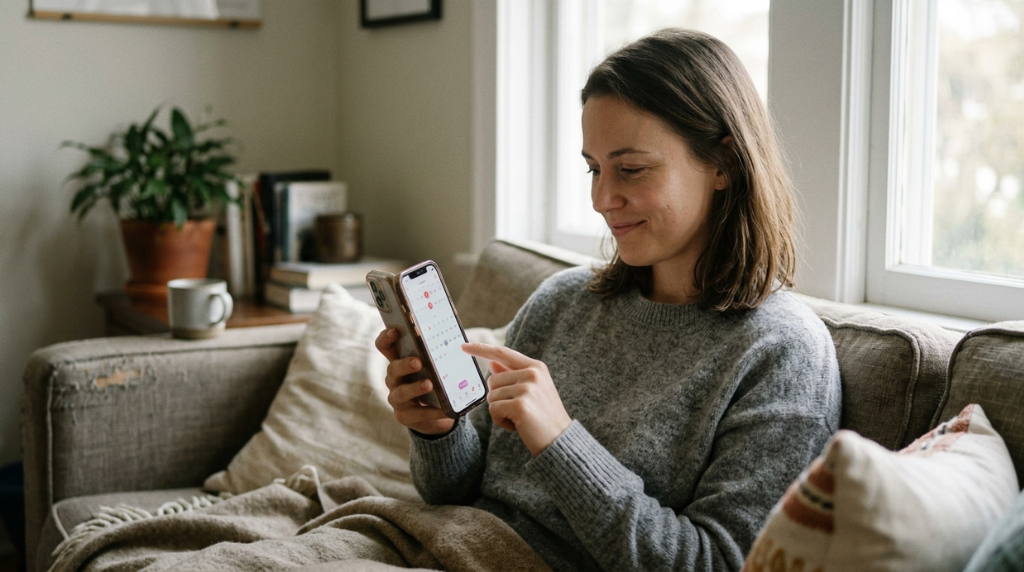
Table of Contents
- What People Actually Mean by “Period Test”
- The DIY Symptom Self-Test (Do This First)
- Ovulation Tests and Why They Matter More Than You Think
- Period Tracking Apps as a Test Tool
- Hormone and Blood Tests (When Doctors Get Involved)
- Period vs Pregnancy: How to Tell the Difference
- Common Mistakes People Make
- When to Actually See a Doctor
- FAQs
- Final Thoughts
What People Actually Mean by “Period Test”
When most people type “period test” into Google, they’re rarely asking about an actual lab test. They want one of three things answered.
- Is my period about to start? (This is the most common period test question of all.)
- Is this normal, or should I worry?
- Am I actually pregnant instead of just PMS-ing hard?
There’s no strip you pee on for this. What works instead is paying attention plus a couple of real tools. Think of it as a period test built from your own body instead of a box from the pharmacy. Here’s how each piece fits.
The DIY Symptom Self-Test (Do This First)
Before any app or kit comes into play, your body is already running its own test. It just doesn’t hand you a printout. Learning to read those signals is the real period test.
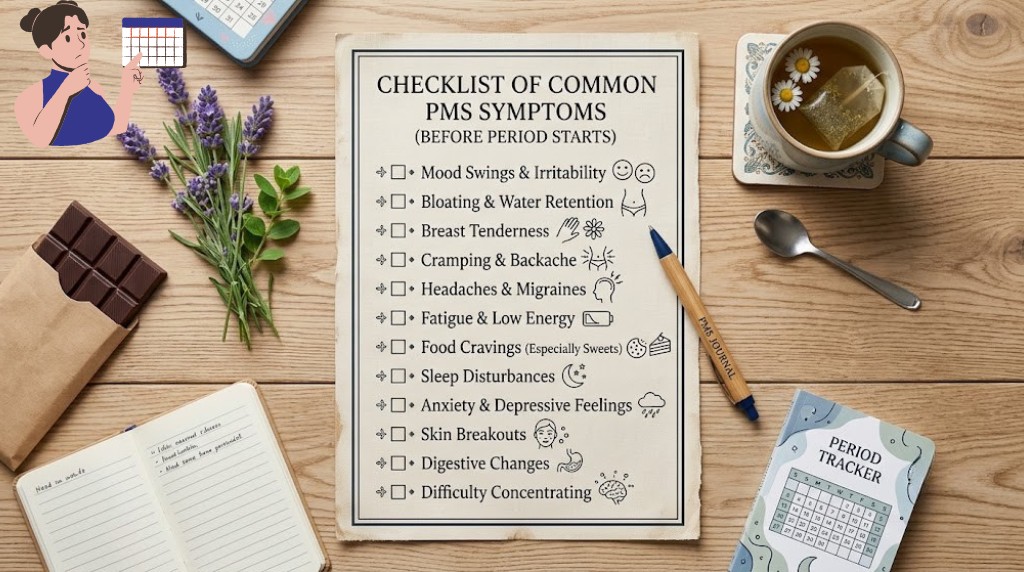
Here’s the checklist I run through with friends who ask me this exact question. Hit three or more of these, and your period is probably showing up within the next 1 to 3 days.
- Lower back ache that feels dull, not sharp
- Bloating that makes your jeans feel tighter overnight
- Breast tenderness or soreness
- Mood swings that feel bigger than the situation calls for
- Food cravings, especially salty or sweet
- Mild cramping low in your belly
- Skin breakouts along the jawline
- Feeling unusually tired
- Headaches, especially if you’re prone to migraines
- Vaginal discharge turning thicker or stickier than usual
Any one of these alone doesn’t mean much. Bloating by itself might just be last night’s pasta. But when three or four show up at once during the luteal phase of your cycle, that’s your body running its own version of a period test. In my experience this DIY period test is right far more often than it’s wrong.
A couple of notes to make the checklist more useful. First, timing matters as much as the symptoms themselves, so check where you are in your cycle before you panic over a single sign. Second, write the results down somewhere, even if it’s just a note on your phone. Symptoms you barely remember three weeks later become obvious patterns when they’re logged across two or three cycles. Third, don’t treat this as a medical diagnosis. It’s a heads up that your period is probably near, not a finding you’d take to a doctor as proof of anything.
Ovulation Tests and Why They Matter More Than You Think
This is the piece almost nobody connects to period prediction, and it’s honestly the most reliable period test trick I know.
An ovulation predictor kit tests for luteinizing hormone in your urine, the hormone that spikes right before you ovulate. Once you know when ovulation happened, count forward roughly 12 to 14 days and you’ll land pretty close to your next period. Run that period test consistently and you’ll rarely be blindsided.
I started using ovulation strips years ago, not because I was trying to conceive, but because I was tired of being blindsided every month. It worked better than any app I’d tried. A basic pack runs less than ten bucks on Amazon and isn’t complicated to use.
The catch: cycles aren’t perfectly consistent. Stress, travel, illness, even a rough night of sleep can shift ovulation by a few days. This method gets you close, not exact.
Period Tracking Apps as a Test Tool
Apps like Flo or Clue run statistical guesswork based on your past cycles. Log at least three months of data, and they get fairly accurate at predicting your next window. That data, more than anything else, is your ongoing period test.
The problem is they’re only as good as the data you feed them. If your cycle runs irregular, or you’ve just come off birth control, the prediction can be way off. I’ve had an app tell me my period was five days out, and it showed up that same afternoon. Treat it as a rough estimate, not gospel. No app is a perfect period test on its own.
Hormone and Blood Tests (When Doctors Get Involved)
If your cycles are wildly unpredictable, missing for months, or something feels genuinely off, this is where an actual medical test comes in. A doctor might order:
- FSH and LH blood tests to check ovarian function
- Thyroid panel, since thyroid issues mess with cycles constantly
- Progesterone test to confirm ovulation happened
- Pelvic ultrasound if there’s suspicion of PCOS or another condition
According to the American College of Obstetricians and Gynecologists, a normal cycle can range anywhere from 21 to 35 days, so irregular is more common than most people assume. But if three months pass with no period and pregnancy isn’t the reason, that’s worth a real conversation with a doctor, not another app.
Period vs Pregnancy: How to Tell the Difference
This is where most late-night googling happens, and it’s the trickiest part because early pregnancy and PMS symptoms overlap almost exactly. Sore breasts, fatigue, cramping, mood changes. Pregnancy mimics PMS closely enough that it feels like a cruel biological joke, which makes the pregnancy-vs-period test genuinely tricky.
Two signs that lean more toward pregnancy than PMS:
- Cramping that feels like light pulling or pinching rather than the usual period ache
- Nausea, especially in the morning, that doesn’t fade with food
If you’ve had unprotected sex and your period is late, a home pregnancy test beats any symptom checklist. That is the one period test with an actual line you can read. The Mayo Clinic notes that home pregnancy tests are most accurate about one week after a missed period, so testing too early can give a false negative even when you are pregnant.
Common Mistakes People Make
I’ve made most of these myself, so no judgment here.
Mistake 1: Testing for pregnancy too early. It’s the same trap as any rushed period test. Testing the day your period was supposed to start but hasn’t can give a false negative. Give it a few more days.
Mistake 2: Trusting the app blindly. Apps guess based on averages. Your body doesn’t read the app.
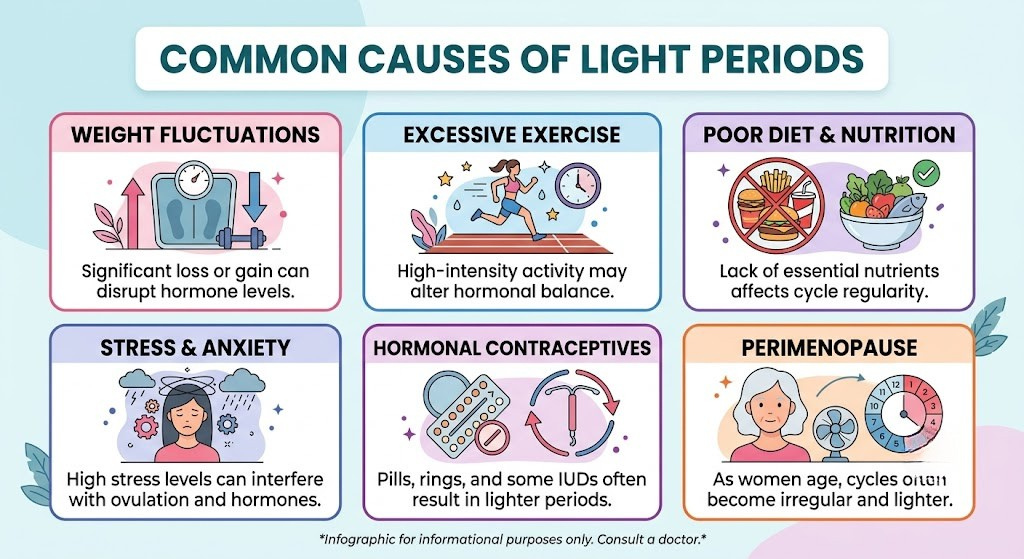
Mistake 3: Ignoring stress as a factor. A missed flight, a breakup, finals week. Any of it can push your period back by days, sometimes weeks. It’s not always hormonal in the strict medical sense.
Mistake 4: Assuming spotting is the same as a period. Light spotting a week before your expected period is often just ovulation spotting, not the start of your cycle.
The Fastest Way to Run Your Own Period Test Tonight
If you want a quick period test you can run right now, without any app or kit, combine two things: the symptom checklist above plus your last cycle date. Count back to your average cycle length and check how many days you are past ovulation. If you’re within the window where your period usually arrives, and you’re hitting three or more symptoms, the odds strongly favor your period showing up within the next day or two.
Here’s a concrete example so it doesn’t feel abstract. Say your cycle runs 28 days and you ovulated around day 14. That puts your period around day 26 to 29. If today is day 27, your breasts are tender, your back is aching, and you cried at a commercial earlier, that’s your body running a period test, and it’s very close to passing. If today is day 10 instead and you feel bloated, the bloating is probably just dinner, not your cycle.
The same logic works in reverse. If your symptoms say period, but your cycle math says you shouldn’t be anywhere near your period yet, trust the calendar more than the checklist. That mismatch is exactly when people convince themselves they’re pregnant or sick when they’re really just mid cycle. A period test built on one data point is unreliable; one built on both symptoms and timing is far more honest.
For anyone who wants the timing half handled automatically, plug your dates into the free period calculator and it does the cycle math for you, so you always know which part of your cycle you’re in before you start reading symptoms.
When to Actually See a Doctor
Skip the DIY approach and book an appointment if you notice any of these, because they’re the cases where a home period test stops being useful:
- No period for three months or more, with pregnancy ruled out
- Periods suddenly turning far more painful than your normal
- Bleeding heavy enough to soak a pad or tampon every hour
- Periods that consistently run longer than seven days
- Mood changes severe enough to feel unmanageable
If your emotional symptoms feel extreme rather than just annoying, that shifts the period test from timing to mood, it may be worth asking about PMDD (premenstrual dysphoric disorder), a more severe form of PMS that affects an estimated 3% to 8% of people who menstruate, according to UPMC HealthBeat.
None of this is meant to scare you. Most irregular cycles have a simple explanation. But your gut usually knows the difference between something actually off and something just annoying.
Wondering how your cycle fits into the bigger picture? If your flow shows up later than expected, read up on the early signs your period is coming late. Bleeding twice in a month instead? That has its own explainer on two periods in one month. And for the full rundown of what your body is telling you, browse our complete menstrual symptoms guide.
[Internal link placeholder: anchor text “signs of PCOS” → link to PCOS symptoms article]
[Internal link placeholder: anchor text “best period tracking apps” → link to app comparison article]
FAQs
Is there an actual medical test called a “period test”?
Not officially. Doctors rely on hormone blood tests, ultrasounds, or ovulation tracking, but there’s no single test branded as a period test.
Can an ovulation test tell me if my period is coming?
Indirectly, yes. Once ovulation happens, your period typically follows 12 to 14 days later.
Why do period apps get my prediction wrong?
They lean on your past cycle data. Stress, illness, travel, and hormonal shifts can all pull your actual cycle away from the predicted average.
What’s the earliest sign my period is about to start?
For most people, it’s mild bloating and breast tenderness, usually 3 to 5 days before bleeding starts.
Can stress delay a period test result or my actual period?
Yes. Cortisol, your stress hormone, can directly delay ovulation, which pushes your entire cycle later.
Do I need to test my period with blood work every year?
No. Routine hormone blood testing isn’t needed for healthy, regular cycles. A doctor typically only orders blood tests when cycles are unpredictable, painful, or missing, or when you’re trying to conceive and it isn’t happening.
How many cycles should I track before trusting a prediction?
Most apps and calculators settle in after about three months of data. The more cycles you log, the better the average, which is why a period test based on tracked history beats one based on a single month.
Final Thoughts
There’s no gadget that announces your period the way a pregnancy test flashes two lines. What actually works is paying attention, tracking a few cycles, and using ovulation tests if you want real data instead of guesswork. Your body’s already running the test. You just have to learn how to read the results.
Think of a period test as a habit, not a one off thing. Run it the same way every month: check your timing, scan the symptom list, log what you see. Consistency is what turns a random guess into a working period test. Within a couple of cycles you’ll stop guessing altogether, because you’ll have built your own personal baseline. That baseline is the closest thing to a reliable period test that exists without a lab.
If your cycle feels genuinely unpredictable, or something feels off, skip the app and the checklist and talk to a doctor instead. That conversation is worth more than any prediction tool.
Ready to actually track your cycle instead of guessing every month? Grab a simple ovulation kit or start logging your symptoms this week. Future you, standing in a parking lot at 11pm, will thank you.
Disclaimer: This article is for general educational purposes only and isn’t a substitute for professional medical advice. If you have concerns about your menstrual cycle, fertility, or possible pregnancy, please consult a licensed healthcare provider.
{
  "@context": "https://schema.org",
  "@graph": [
    {
      "@type": "Article",
      "headline": "Period Test: How to Know If Your Period Is Coming (Signs)",
      "description": "Wondering if your period is coming? See how a period test really works, the early signs your body gives, and when it could be something else.",
      "datePublished": "2026-07-08",
      "dateModified": "2026-07-08",
      "author": {
        "@type": "Person",
        "name": "Add Author Name Here"
      },
      "publisher": {
        "@type": "Organization",
        "name": "Add Publisher Name Here",
        "logo": {
          "@type": "ImageObject",
          "url": "Add Logo URL Here"
        }
      },
      "mainEntityOfPage": {
        "@type": "WebPage",
        "@id": "https://example.com/period-test-signs"
      }
    },
    {
      "@type": "FAQPage",
      "mainEntity": [
        {
          "@type": "Question",
          "name": "Is there an actual medical test called a \"period test\"?",
          "acceptedAnswer": {
            "@type": "Answer",
            "text": "Not officially. Doctors rely on hormone blood tests, ultrasounds, or ovulation tracking, but there's no single test branded as a period test."
          }
        },
        {
          "@type": "Question",
          "name": "Can an ovulation test tell me if my period is coming?",
          "acceptedAnswer": {
            "@type": "Answer",
            "text": "Indirectly, yes. Once ovulation happens, your period typically follows 12 to 14 days later."
          }
        },
        {
          "@type": "Question",
          "name": "Why do period apps get my prediction wrong?",
          "acceptedAnswer": {
            "@type": "Answer",
            "text": "They lean on your past cycle data. Stress, illness, travel, and hormonal shifts can all pull your actual cycle away from the predicted average."
          }
        },
        {
          "@type": "Question",
          "name": "What's the earliest sign my period is about to start?",
          "acceptedAnswer": {
            "@type": "Answer",
            "text": "For most people, it's mild bloating and breast tenderness, usually 3 to 5 days before bleeding starts."
          }
        },
        {
          "@type": "Question",
          "name": "Can stress delay a period test result or my actual period?",
          "acceptedAnswer": {
            "@type": "Answer",
            "text": "Yes. Cortisol, your stress hormone, can directly delay ovulation, which pushes your entire cycle later."
          }
        }
      ]
    }
  ]
}