
Table of Contents
- That Week Where Your Body Just Checks Out
- Why Your Energy Tanks Before Your Period
- Is This Normal or Something Else?
- What Actually Helped Me (and What Didn’t)
- When Low Energy Might Mean PMDD
- Foods That Help vs. Foods That Make It Worse
- Sleep, Movement, and the Stuff Nobody Tells You
- When to Talk to a Doctor
- FAQs
- Final Thoughts
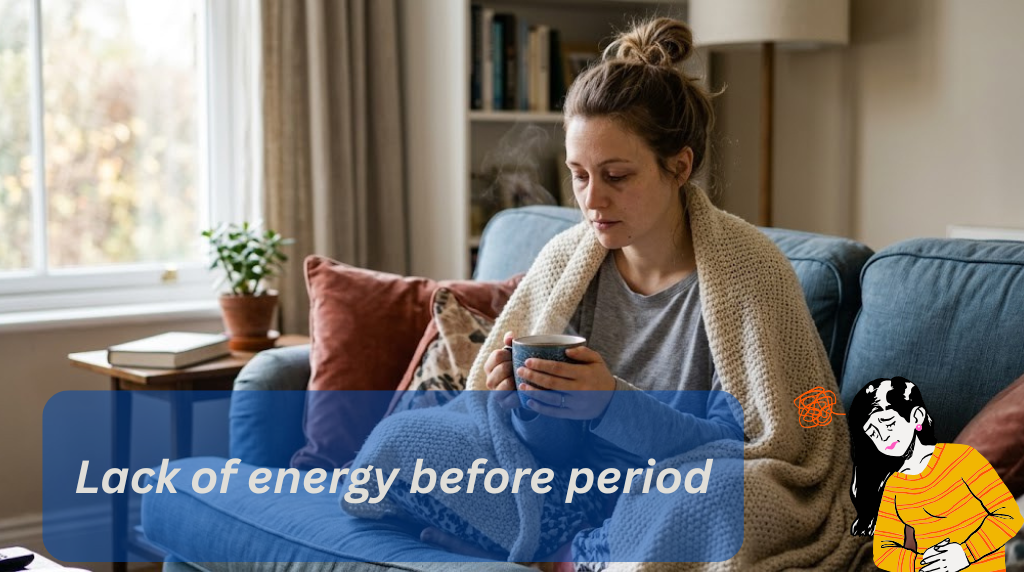
Being tired before your period is something I dealt with for years before I understood why it kept happening. There’s a specific kind of tired that shows up about a week before my period. Once you’re the one who is tired before your period, you’ll know exactly what I mean, and it’s not the regular kind. Regular tired means I want a nap. This kind means I could lie down on the kitchen floor and consider it a reasonable life choice.
For years The phrase “tired before your period” never crossed my mind, so I chalked it up to laziness. Or maybe I was coming down with something. Or I just hadn’t slept enough, even on nights I clocked a solid nine hours. It took me embarrassingly long to notice the pattern: this happened like clockwork, every single month, right before my period showed up. That repetition is what finally made me search tired before your period.
If you’re here because you searched why you have no energy before your period, or simply “tired before your period,” you probably already suspect the connection, you probably already suspect the connection. You’re just looking for confirmation, and something more useful than the usual “it’s hormones” shrug.
So here’s what’s actually going on.
This article reflects personal experience combined with information reviewed against established medical sources. It is not a substitute for advice from your own doctor.
Why Your Energy Tanks Before Your Period
Feeling tired before your period is mainly caused by a sharp drop in progesterone paired with lower serotonin levels during the luteal phase, the two weeks between ovulation and your next period.
Progesterone rises after ovulation, peaks, then falls hard right before your period starts. For most of the month your energy is fine; being tired before your period specifically tracks that progesterone crash. That crash is a big piece of the fatigue puzzle, and it’s the main biological reason you’re tired before your period. Progesterone has a mild sedative effect on the brain, so when it’s climbing and then suddenly dropping, your energy and mood can swing like a rollercoaster, which is exactly why being tired before your period feels so different from normal tiredness nobody bought a ticket for.
Serotonin dips around the same time. That matters because serotonin affects mood, sleep, and energy. Lower serotonin explains a lot of the fog, the lack of motivation, the emotional heaviness some people feel in the days leading up to their period.
Then there’s blood sugar. A lot of people who are tired before their period also crave carbs and sugar hard in the same window, and that’s not just a willpower thing. Hormonal shifts can slightly change insulin sensitivity during this phase, so blood sugar swings hit harder than usual and drain energy fast.
Iron is worth checking too, and it’s a hidden reason many people are tired before your period. If your periods run heavy, you might already be low on iron by the time your next cycle starts, which piles onto the tiredness before it even begins. If you’re tired before your period and your flow is heavy, iron is one of the first things to check.
Is This Normal or Something Else?
, Most people who menstruate deal with some version of PMS, and fatigue sits right up there with bloating and mood swings as one of the top complaints. Alongside feeling tired before your period, the full list of menstrual symptoms includes cramps, headaches, and sore breasts, all of which can pile up in the same week.
Here’s a rough way to tell the difference: if your energy dips but you can still function, that’s the typical version of tired before your period, work, socialize, and get through your day even if it’s less fun than usual, that’s typical PMS.
But if the exhaustion is severe enough to derail your week, that goes well beyond ordinary tired before your period, or it’s paired with intense sadness, anxiety, or irritability that feels out of proportion to what’s actually happening, that’s worth paying closer attention to. More on that below.
What Actually Helped Me (and What Didn’t)
I went through a lot of trial and error before finding what moved the needle, and I tried nearly everything before I got being tired before your period under control. Some of it I figured out on my own, some came from a nurse practitioner I finally talked to about it.
Things that helped:
- More protein at breakfast. This single change did the most to stop me being tired before your period every morning. I used to just have coffee and toast. Switching to eggs or a protein shake made a real difference in how sluggish I felt by 10 a.m.
- Less sugar in the afternoon. Not cutting it out entirely, just noticing the 3 p.m. candy bar was making my 4 p.m. crash worse.
- Magnesium. I started taking magnesium glycinate in the two weeks before my period, since that’s the stretch where being tired before your period hits hardest after reading about it, and my sleep improved, which helped daytime fatigue more than expected.
- Short walks instead of forcing a full workout. On days I was tired before your period, this beat pushing through a hard session. On low energy days, twenty minutes outside did more for me than guilt-tripping myself into a spin class I had zero energy for.
Things that didn’t help, or made it worse:
- Extra caffeine to push through. It’s the most tempting fix when you’re tired before your period, and it backfires the most. It just delayed the crash and wrecked my sleep, which made the next day’s fatigue worse.
- Skipping meals because I “wasn’t hungry.” Low appetite plus low blood sugar is a rough combination.
- Ignoring it for years. My biggest mistake was assuming this was something to tough out instead of asking whether there were real, manageable causes behind it.
None of this is medical advice specific to you. Bodies vary, and what ends your “tired before your period” run might be different from mine. But these were the unglamorous, practical changes that made a dent.

When Low Energy Might Mean PMDD
Premenstrual dysphoric disorder, or PMDD, is a more severe form of PMS that goes far beyond being tired before your period. It affects a smaller share of people, but it’s real, and it’s more than being “extra moody.”
With PMDD, the fatigue often shows up, and the exhaustion is a much heavier weight than ordinary tired before your period alongside intense mood changes: hopelessness, irritability disconnected from what’s actually happening, anxiety, sometimes thoughts scarier than typical PMS ever brings. According to the Office on Women’s Health, PMDD symptoms are severe enough to interfere with daily life, work, or relationships, showing up in the week or two before your period, the same window where you’re typically tired before your period before easing once it starts.
If that sounds familiar, this isn’t something to fix with a better breakfast and some magnesium. That’s a conversation for a doctor, and there are real treatment options, including certain antidepressants and hormonal approaches that have helped many people. Constant exhaustion can also be one of the early signs your period is coming late rather than on schedule, which is worth ruling out if the timing feels off too.
Foods That Help vs. Foods That Make It Worse
I’m not going to tell you to swear off chocolate before your period. When you’re tired before your period, a little dark chocolate is the least of your worries. That’s not realistic and dark chocolate has magnesium in it anyway.
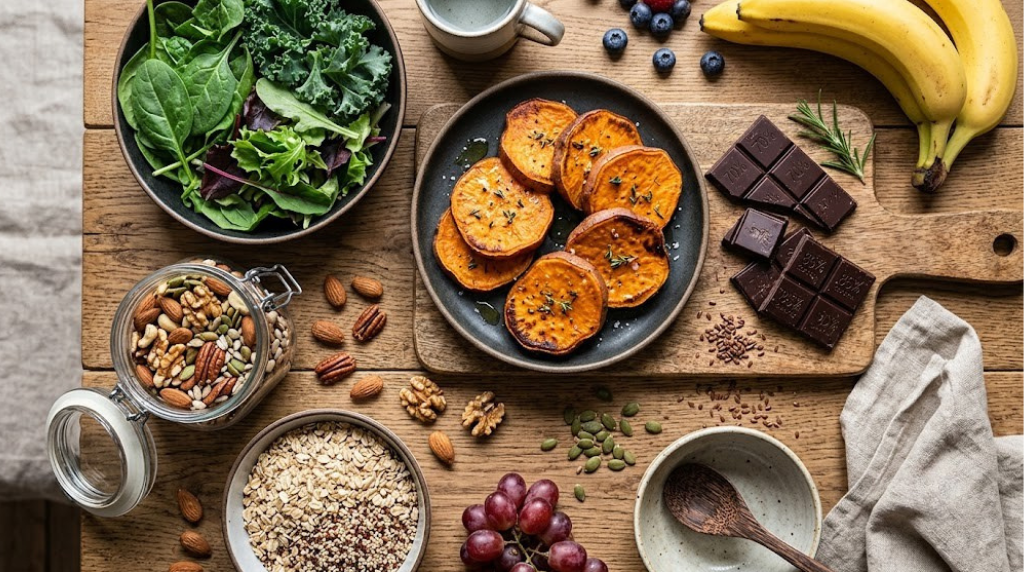
Foods that tend to help:
- Leafy greens and iron-rich foods. If you’re tired before your period, this is the food group to lean on such as spinach lentils and red meat if you eat it
- Complex carbs like oats and sweet potatoes which release energy slower than refined sugar
- Healthy fats like avocado and nuts which help stabilize blood sugar
- Water. Dehydration makes fatigue worse and it’s the easiest thing to overlook
Foods that tend to make it worse:
- Back to back refined sugar which spikes blood sugar then crashes it
- Excess salt which can worsen bloating and indirectly how sluggish you feel
- Too much caffeine late in the day since it messes with the sleep you need to recover energy
The Cleveland Clinic has doctor-reviewed info on how diet interacts with PMS symptoms if you want to go deeper here.
Sleep, Movement, and the Stuff Nobody Tells You
Body temperature rises slightly during the luteal phase, and for anyone tired before your period, this explains the groggy mornings That small increase can affect sleep quality even when you don’t notice it directly. You might sleep the same number of hours and still wake up wrecked.
Knowing this helped me stop blaming myself for “not sleeping right.” Sleep that’s interrupted by the hormone shift is still sleep, but it explains why you can be tired before your period despite a full night in bed. and just plan around it, like going to bed thirty minutes earlier that week rather than trying to fix something that wasn’t broken.
On movement, this is the week to lower the bar, not raise it. Gentle activity like walking, stretching, or easy yoga tends to help more than intense workouts, which can sometimes deepen the fatigue instead of shaking it off. This isn’t about being weak. It’s about working with what your hormones are doing instead of fighting them.
How to Recharge on the Days You Feel Drained
When you’re tired before your period, the worst thing you can do is white-knuckle your way through the whole week and then collapse on the weekend. A better approach is to plan the low energy days in advance, because you know they’re coming. Look at the week before your period and schedule it like a stretch of bad weather: keep the appointments that matter, move the ones that can move, and protect an hour of downtime each evening.
Short naps help more than people expect, but the timing matters. A 20 minute nap before 3 p.m. can lift you without wrecking that night’s sleep, while a two hour nap in the evening will leave you staring at the ceiling at midnight. If napping isn’t an option, closing your eyes for a few minutes with your feet up counts as a reset too, even if you don’t fall asleep.
Hydration deserves more credit than it gets. Mild dehydration can masquerade as fatigue, and it’s easy to drift through a busy week barely drinking anything. Keep a water bottle where you’ll actually see it, and notice whether a glass of water plus a protein snack changes how you feel an hour later. It sounds too simple, but it frequently is the difference between dragging and functioning.
Finally, cut yourself some slack. Feeling tired before your period is a documented physical response, not a character flaw. When you stop treating it as a failure, the energy you burn on guilt frees up for the things that actually restore you. If the fatigue keeps you in bed an extra hour one Saturday, that’s not a wasted day, that’s your body asking for what it needs.
When to Talk to a Doctor
Fatigue before your period is common, but don’t assume every version of exhaustion is the same. If you’re tired before your period every single month with no break is just normal PMS forever. It’s worth checking in with a doctor if:
- The fatigue is severe enough to disrupt work school or relationships
- It comes with heavy periods which can point to low iron or anemia
- You notice mood symptoms more intense than typical PMS
- The fatigue doesn’t ease up once your period starts and lingers
- You suspect something else entirely like a thyroid issue which can cause fatigue and gets mistaken for PMS more often than you’d think
A simple blood test can rule out iron deficiency or thyroid problems, both of which can masquerade as ordinary tired before your period. Both are common and both are treatable once you know what’s going on.
FAQs
Why am I so tired the week before my period?
Mostly the drop in progesterone and shifts in serotonin that happen during the luteal phase, the two weeks between ovulation and your period. Blood sugar swings and low iron can make it worse.
Is it normal to feel exhausted before your period?
Yes. Mild to moderate fatigue is one of the most common PMS symptoms. It becomes a concern when it’s severe enough to disrupt your daily life or comes with intense mood changes.
What vitamins help with pre-period fatigue?
Magnesium, iron, and vitamin B6 are commonly recommended. Talk to your doctor before starting supplements, especially iron, since too much can cause its own problems.
Can low energy before my period mean I’m pregnant?
Fatigue can be an early pregnancy symptom, but it’s just as often tied to PMS. If your period is late and the fatigue feels different than usual, a pregnancy test can rule it out.
Does birth control help with pre-period fatigue?
For some people, yes, since it can stabilize hormone fluctuations. It affects everyone differently, so it’s worth discussing with your doctor rather than assuming it’ll work the same way for you.
How long before my period does the fatigue start?
Most people notice the dip in the second half of their cycle, usually somewhere between a week and a few days before bleeding starts. The exact timing follows your own luteal phase, which is why tracking your cycle helps you predict when the tired days will hit.
Can being tired before your period make your mood worse?
It often does, because the same hormone drop that drives fatigue also lowers serotonin, which regulates mood. Poor sleep from the energy crash can then compound both. Treating the fatigue first, with sleep and steadier blood sugar, often lifts the mood symptoms along with it.
Final Thoughts
The fatigue that shows up before your period isn’t in your head. Being tired before your period is a real, physical response to real hormone changes, and it isn’t laziness. It’s your hormones doing a real physical thing, and there are ways to work with it instead of gritting your teeth through it every month.
Pay attention to your own pattern. Track it if you can. What helps one person might do nothing for another, but most people find relief through a mix of better sleep habits, steadier blood sugar, and giving themselves permission to slow down that week instead of pushing through it. If you want the timing half handled automatically, log your last few start dates in the free period calculator so you know exactly when the low energy week is coming next.
And when the tired days do land, remember the three layers in order: check the easy stuff first, water, protein, and sleep, then look at hormones, which is where the calendar helps, and finally loop in a doctor if the exhaustion is severe, paired with heavy bleeding, or doesn’t lift once your period starts. Working through it in that order keeps you from spiraling and gets you an actual answer instead of years of guessing.
CTA
If this sounds like your monthly pattern, start tracking your energy alongside your cycle for a couple of months. The patterns you notice yourself are often more useful than anything you’ll read online, including this article.